

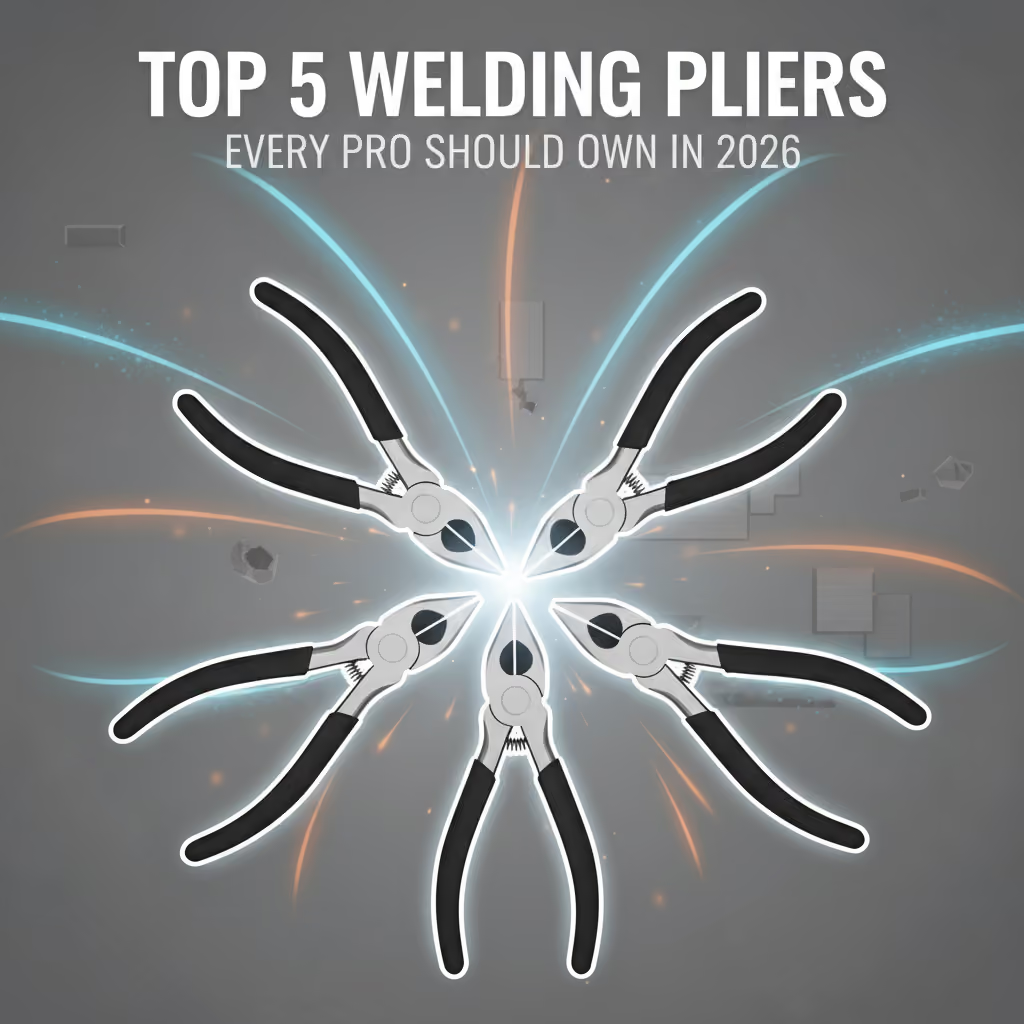
Discover the top welding pliers for professionals in 2026. Compare features, use cases, and tips to choose the right tools for every welding job.
In welding, some tools make noise and demand attention. Welding pliers do not. They work quietly, reliably, and constantly, always within reach, handled dozens of times a day, yet rarely recognized when a job goes smoothly.
The true measure of a welding setup often lies in these unassuming tools. Their value isn’t in the brand, but in how well they handle heat, wear, and repeated use. If you are building a complete welding tool setup, it is worth reviewing what makes professional gear last in real environments.
In 2026, expectations for welding pliers have evolved: ergonomics are more important, materials are more durable, and multifunction designs now combine versatility with dependable leverage.
This guide covers the five welding pliers every professional should consider, plus tips on choosing the right tool for your workflow.
Many welders initially treat pliers as generic hand tools. Over time, it becomes clear that good pliers:
Reduce hand fatigue during long welding sessions
Speed up wire changes
Handle hot spatter without slipping or deforming
Prevent minor safety issues before they escalate
A pair that cuts cleanly and releases smoothly may seem ordinary, but after hours on the job, it becomes essential. Like all professional equipment, pliers benefit from proper welding tool maintenance to preserve performance over time.
For deeper insight into avoiding premature wear, see our guide on extending the lifespan of your welding tools.
Professional pliers endure repeated exposure, not just brief contact.
Poor alloys soften over time, causing misaligned jaws or dull cutting edges.
Durability matters especially when working in demanding environments such as pipeline or structural projects where heat exposure is constant.
Forged steel remains standard.
Oxide and phosphate coatings resist spatter better than glossy finishes.
Handle shape and spring tension matter more than padding.
Subtle curves reduce fatigue during full shifts, particularly when paired with a properly designed workstation. If you are refining your station, review our guide on creating a disaster proof welding station to improve overall efficiency.
Primary role: Wire cutting, nozzle cleaning, spatter removal, light hammering
These remain the backbone of most kits. The better versions integrate multiple functions without compromising leverage. In recent designs, the cutting edges are harder and better aligned, reducing the need to squeeze twice.
Where they shine: MIG setups with frequent wire changes and nozzle maintenance
Workflow fit: Daily driver, often paired with welding clamps for fit up control. For comparison between positioning tools, see Welding Magnets vs Adjustable Clamps: Which Is Better for Comple
x Projects?
Primary role: Accessing tight joints and confined weld zones
These are not about brute force. They exist for precision in awkward spots. Heat treatment quality matters here, as thin jaws take more stress than they appear to.
Pro scenarios include structural corners, pipe work, and repair jobs. In complex fit ups, they complement strong alignment techniques outlined in Pipe Alignment Secrets: Using Tools to Avoid Misalignment in Complex Welds.
Primary role: Holding parts securely during tack welds
Locking weld pliers function like controlled extra hands. When adjusted well, they hold without crushing or shifting, which matters more than raw clamping force.
Use cases include repetitive assemblies and heavier gauge materials. They are often used alongside alignment tools discussed in Magnetic Welding Tools Explained: Best Uses and Top Picks for 2026.
Primary role: Clean wire trimming and finishing work
Flush cut designs are more common in fabrication shops than in field work, but their value is real. Clean cuts reduce rework and prevent snagging during passes.
Best for TIG and detailed MIG work. These tools pair naturally with precision TIG welding accessories designed to minimize defects and improve finishing quality.
Primary role: Slag removal and light chipping
Hybrid designs are easy to get wrong. The better ones balance scraping efficiency without turning into blunt instruments.
Ideal for stick welding and flux core cleanup. For better electrode selection during stick work, see our guide on choosing the right welding rods and electrodes for every job.
MIG Welding
Frequent wire handling makes multifunction pliers essential. Clean cutting edges are critical.
TIG Welding
Precision dominates. Long nose and flush cut pliers prevent accidental marks on thin metal.
Stick Welding
Slag control is key. Slag scraper hybrids excel.
Flux Core
Heat resistance and scraper durability are more important than precision.
Most professionals rotate two to three pliers depending on the task. When building a reliable workflow, it helps to review the Ultimate 2026 Guide: Best Welding Tools Every Professional Welder Needs to ensure your tool selection works together.
Clean pliers after every shift; cooled spatter sticks to metal.
Store in a dry area, away from grinding dust.
Use flame resistant gloves and clothing near hot material.
Small habits can add months or years to a tool’s lifespan. For common mistakes that shorten durability, review Top 5 Welding Tool Maintenance Mistakes That Reduce Lifespan.
Tentacle Tools approaches welding accessories from a practical, on the job perspective. Their catalog focuses on professional welding accessories built for real job sites, solving daily problems without adding unnecessary features.
Welding pliers sit alongside thoughtfully designed welding clamps and positioning aids, not as standalone products but as part of a coherent workflow. If you want a deeper look at their philosophy, read Why Tentacle Tools is the Go To Brand for Welders and Engineers.
If you are refining a setup rather than replacing everything, it may be worth reviewing how these tools interact on real jobs, not just on paper.
Upgrade smarter, not harder. Explore Tentacle Tools and see how small changes make a big difference on the job.
A: Most carry two to three, covering general use, precision work, and cleanup.
A: Not always. Material quality and design matter more than price alone.
A: Unlikely. Different processes require different pliers.
A: When cutting edges are dull, or jaws misalign beyond adjustment.
A: Yes, if the functions are well integrated and regularly used.
Explore insights, tips, and trends in tech and productivity!