

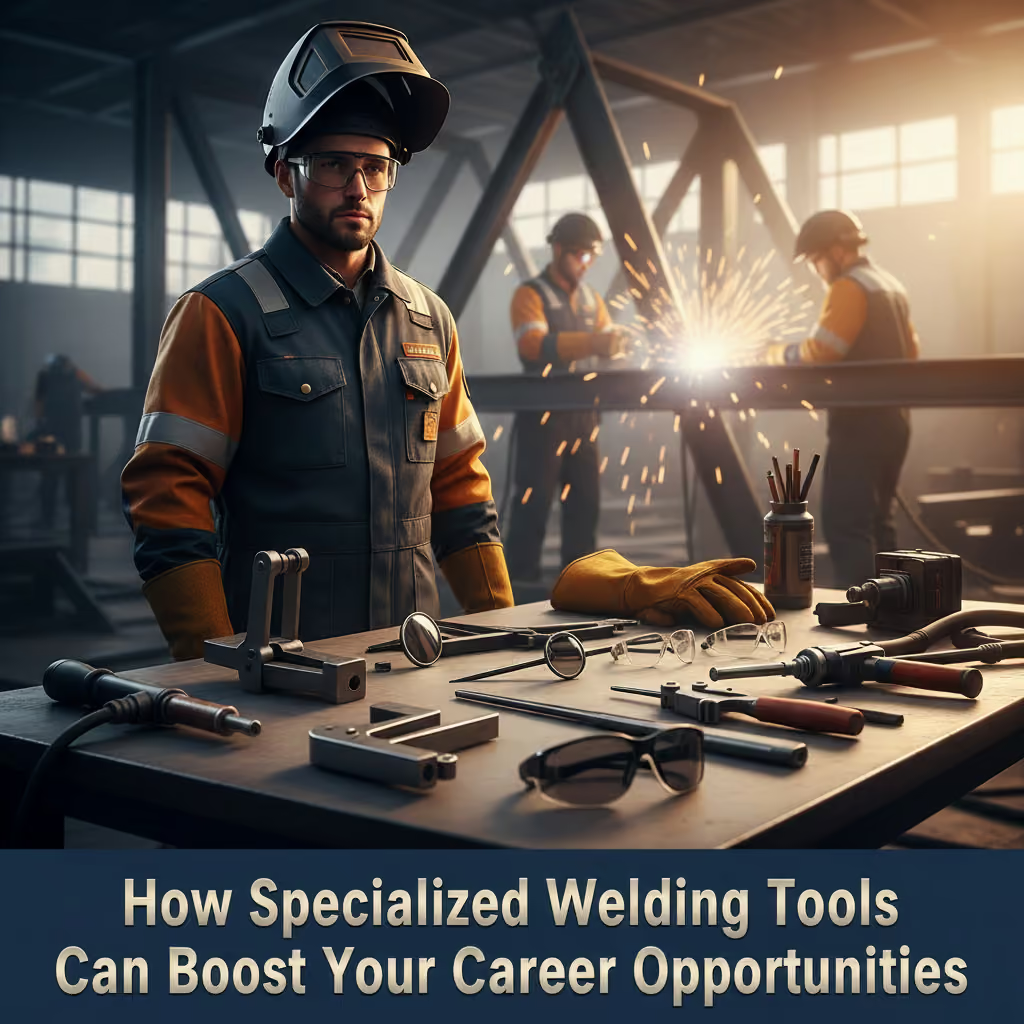
How specialized welding tools shape credibility, performance, and long-term welding career opportunities.
On a modern job site, skill still matters — but it’s not the only signal. Foremen notice preparation, inspectors notice discipline, and peers notice efficiency. Even before work begins, the tools a welder uses tell a story about their professionalism.
In 2026, as competition grows across welding disciplines, welding tools have become more than equipment; they are indicators of skill, certification, and reliability — quietly influencing opportunities and reputation.
The welding labor market hasn’t softened, but expectations have sharpened. Employers face pressure from insurers, inspectors, and clients. Rework is costly. Safety violations escalate quickly. Production delays can ripple across entire schedules.
Skill alone may get you hired. Consistency is what keeps welders employed long term.
On many sites, first impressions happen fast. A welder who arrives organized, carrying well-maintained welding tools and appropriate accessories, earns trust earlier. That trust leads to autonomy — and autonomy leads to better assignments.
Tools act as proof of professional intent.
Pipeline, structural, and fabrication work remain steady. At the same time, entry-level welders are entering the workforce faster than seasoned professionals are retiring.
This raises the bar. Welders who demonstrate efficiency and self-sufficiency stand out sooner — especially those using the right specialized welding tools.
A clean weld bead is important. But so is:
Specialized welding tools quietly support all three.
Most welders start with generic kits — and that’s perfectly fine. Commodity tools are accessible, replaceable, and sufficient for learning fundamentals.
Career-defining tools, however, behave differently.
They:
Generic welding rods melt metal. Specialized welding rods match material, position, and inspection standards with fewer surprises.
The same principle applies across your entire setup — from welding torches to alignment tools.
Experienced welders often prefer equipment designed by people who have worked in the field. Specialty fit-up clamps or inspection mirrors built by field welders anticipate real-world constraints better than generic catalog products.
That preference usually develops after a few tough lessons on real job sites.
Career growth rarely comes from flashy gear — it comes from thoughtful choices.
Hard-to-see welds fail more often than clearly visible ones. This isn’t opinion — it’s pattern recognition.
Magnetic welding inspection mirrors allow self-checking before quality control steps in. Inspectors respect welders who identify and correct their own issues early.
Adjustable magnetic mirrors — like those developed by Tentacle Tools — allow tight-joint inspection without awkward repositioning. That single habit can prevent repeat failures.
Fit-up rarely receives praise — but everyone notices when it’s wrong.
Pipe alignment errors affect penetration, distortion, and downstream weld quality. Welders who improve joint consistency quickly become reliable assets.
Compact pipe fitters and precision clamps separate average welders from go-to professionals. They don’t replace skill — they amplify it.
Foremen remember the person who keeps joints consistent under pressure.
Safety is no longer optional — it’s procedural.
ANSI-rated eye protection, proper TIG welding gloves, and flame-resistant clothing are baseline expectations. Showing up without them doesn’t look tough — it looks careless.
Professional-grade welding safety gear is part of your toolset — whether acknowledged or not.
Specialization doesn’t replace fundamentals.
Inspectors notice consistency long before they praise speed.
The goal isn’t complexity — it’s intentional tool selection.
Welding career progression may look informal — but patterns exist.
These outcomes lead to repeat call-backs. Repeat call-backs lead to better job selection. Better jobs typically mean better pay.
Supervisors promote welders who make their lives easier. The right specialized welding tools contribute directly to that reputation.
Toolkits should evolve.
For apprentices:
For experienced welders:
Avoid gimmicks. If a tool doesn’t solve a recurring problem, it doesn’t belong in your kit.
Brands focused on real job conditions — not showroom appeal — tend to produce tools that hold up under daily use.
If your kit hasn’t evolved in years, it may be time to reassess what it signals.
Professional growth is rarely loud. It builds through small, consistent impressions.
The right welding tools don’t guarantee success — but they remove friction between skill and result.
Sometimes, that difference shows up on the next call sheet.
They often influence early trust and responsibility, shaping long-term career opportunities.
Not inherently — unless they slow work or increase rework.
Reliable welding rods, inspection tools, and safety gear.
When they no longer support efficiency or meet job requirements.
Less than durability and design intent.
Careers rarely pivot on one decision. They bend through accumulated impressions. Preparation. Consistency. Quiet competence.
Your welding tools, welding rods, and specialized accessories shape those impressions long before a résumé does.
Sometimes, the arc tells only half the story.
Explore insights, tips, and trends in tech and productivity!