

Discover common errors deep sea welders face, tips for safety, pay insights, and gear advice to excel in underwater welding and pipeline work.
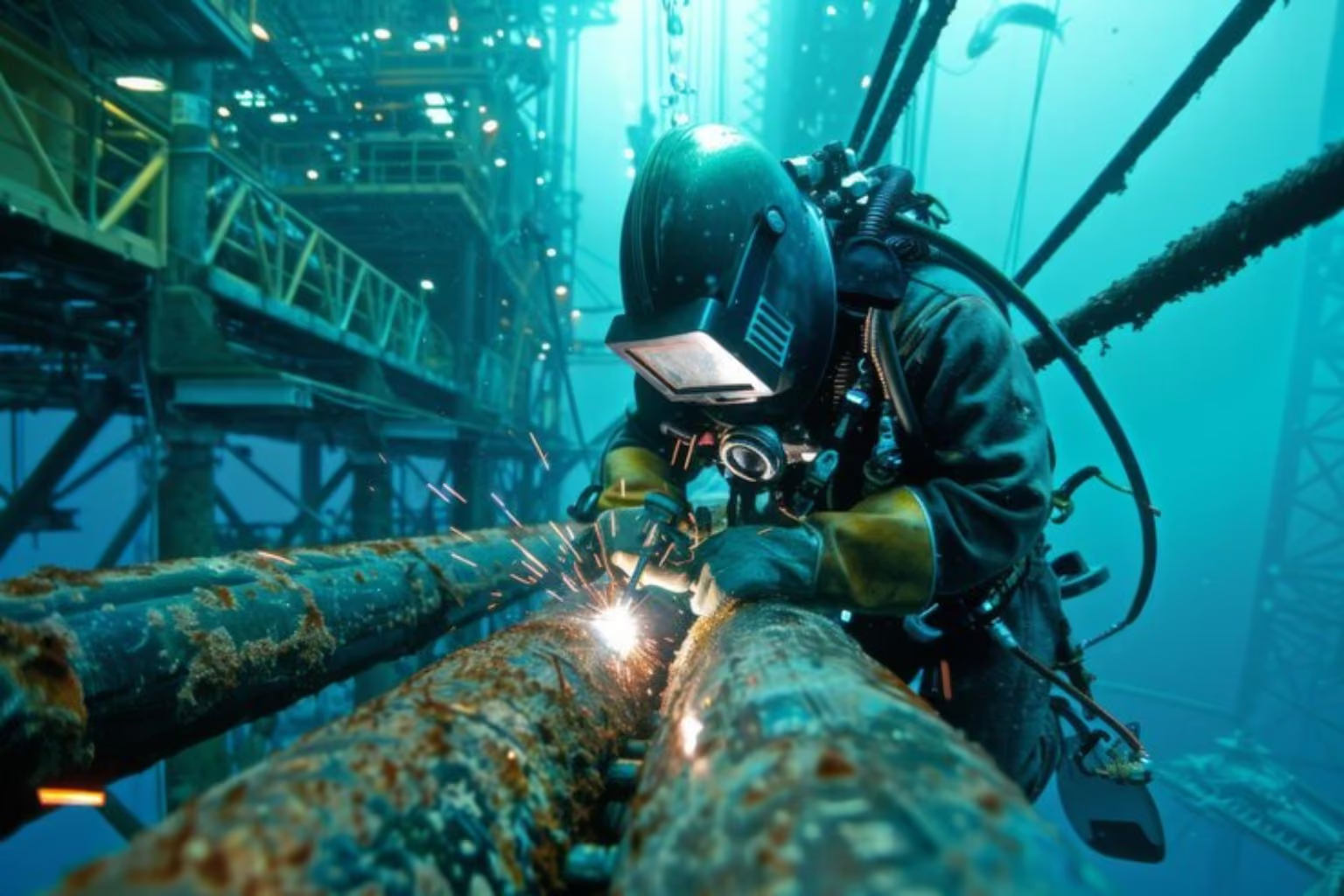
A few things about underwater work stay consistent no matter where you dive. Pressure changes, the cold, and the silence that settles around your helmet all remind you that a deep sea welder carries more risk than most trades. People sometimes focus on the dramatic parts of the job, but the real trouble usually starts with small habits that slip, often during ordinary tasks. This is where mistakes build, and where the job begins to take its toll.
Some welders enter the water prepared. Others carry habits that may appear harmless on the surface. Down there, nothing is harmless. Anyone working as a deep sea welder learns this quickly, sometimes the hard way.
Below are the patterns many divers get caught in, often unintentionally.
Time has a strange feel underwater. Work feels slower, your breathing shifts, and small misjudgments appear. People who start as deep sea welder often underestimate how pressure influences their awareness. It is believed that long exposure can dull judgment. Not always noticeably, but enough that a routine weld can drift from safe to risky.
A common example involves tool handling. A diver may think a misaligned electrode is minor, yet the pressure combined with restricted visibility makes correction harder. Problems escalate when small errors go unchecked.
Visibility is never consistent. You can drop into clear water, then watch it shift into a heavy cloud the moment silt rises. A deep sea welder who moves too quickly stirs everything around them. Many new divers admit they lost track of structures because they assumed the water would remain clear. It rarely does.
Reduced visibility affects weld accuracy, spatial awareness, and your ability to sense minor changes in arc behavior. Some divers try to push through. That usually leads to rework or a poor bead that fails inspection. Worse, it can compromise the structure entirely.
This is a practical mistake, but it matters. Underwater welding pay rates vary widely, sometimes even by project phase. Some divers accept a job without checking the pipeline welder pay for the same region. Others overlook how offshore work differs from inland jobs. Oil rig underwater welder salary figures are inconsistent across companies, so a diver may assume they are earning competitive rates when they are not.
Below is a simple comparison that many divers wish they had reviewed earlier.
Relying Too Much on Surface Instructions Without Questioning Them
Surface teams guide divers, yet communication delays happen. A diver who depends fully on top side directions may react a second too late. It appears harmless until a current changes or a clamp slips. Some surface instructions are based on assumptions that do not match underwater reality.
Human hesitation is necessary here. You hear a command that does not match what you feel around your hands. Pressure on the rope, vibration through the metal, even the quiet hum of the arc tells you something different. A deeper awareness helps reduce mistakes.
Electrode handling becomes trickier when gloves stiffen from cold, and the water moves unpredictably. New divers tend to rush the orientation, thinking muscle memory will catch up. It rarely does. Misplaced angles lead to unstable arcs. This is where porosity creeps in.
Porosity is one of those things that grows unnoticed. You think your bead looks fine. Then a test reveals pockets where there should be none. A deep sea welder sees this often during field inspections. It is frustrating, easily preventable, and costly in both time and pay.
Fatigue underwater feels different from surface fatigue. Your body works harder to regulate heat, maintain orientation, and remain alert. Welders who ignore these signs often commit errors during the last ten minutes of a shift. A torch slip, a misread gauge, a misaligned cut, all small mistakes with heavy consequences.
Even experienced underwater diver welders admit that fatigue changes their reaction speed. Some try to push through, usually because of project pressure. That decision may increase risk without improving productivity.
Every diver has a preferred set of tools, but not all gear performs well under prolonged stress or sudden strain. When joints flex under external pressure, equipment may react differently. Some tools stiffen slightly, others vibrate more. A deep sea welder learns by feel, yet some ignore the early signs of tool fatigue.
When equipment does not behave as expected, mistakes follow. Weld lines become inconsistent, and alignment drifts. Even a small deviation can turn a well planned repair into a weak joint.
This is not the checklist with gauges and hoses. This is the internal check. The quiet moment before the dive when you look through the plan and imagine possible complications. Many divers skip this step because it feels unnecessary. They trust the briefing. They trust their training. Still, underwater environments are unpredictable.
A mental check helps the diver anticipate challenges. Limited light, shifting currents, or awkward weld angles. It prepares the mind against the suddenness that often leads to mistakes.
Thinking about upgrading gear to reduce some of these issues. If so, Tentacle Tools offers products shaped by welders who worked in similar conditions. Their equipment is designed to reduce small frustrations that accumulate during a dive. People looking for tools built with real field experience might find their products practical, especially for day to day use.
Upgrade Your Gear Today – Experience the Difference of Tools Built for the Job!
A deep sea welder who understands these patterns usually works with fewer setbacks. Not because they are perfect, but because they recognize how unpredictable underwater environments can be. The best divers appear calm because they prepare quietly, adjust quickly, and question anything that feels slightly off.
Stay aware of the details. They decide how safe and efficient your work becomes.
1. What causes most errors for a new deep sea welder
Fatigue, rushing setup, and misreading visibility tend to be the most common.
2. Are underwater welding pay rates consistent between regions
No, conditions change pay levels significantly.
3. Does visibility affect weld strength
It often does because poor visibility leads to misaligned beads.
4. Is the average pay for an underwater welder higher offshore
Usually yes, especially when working near rigs or deep pipelines.
5. How important is pre dive planning for welders
It is considered essential for reducing unexpected complications.
Explore insights, tips, and trends in tech and productivity!