

Learn essential safety tips for deep sea welding. Protect yourself with the right gear, techniques, and habits every scuba welder should know.
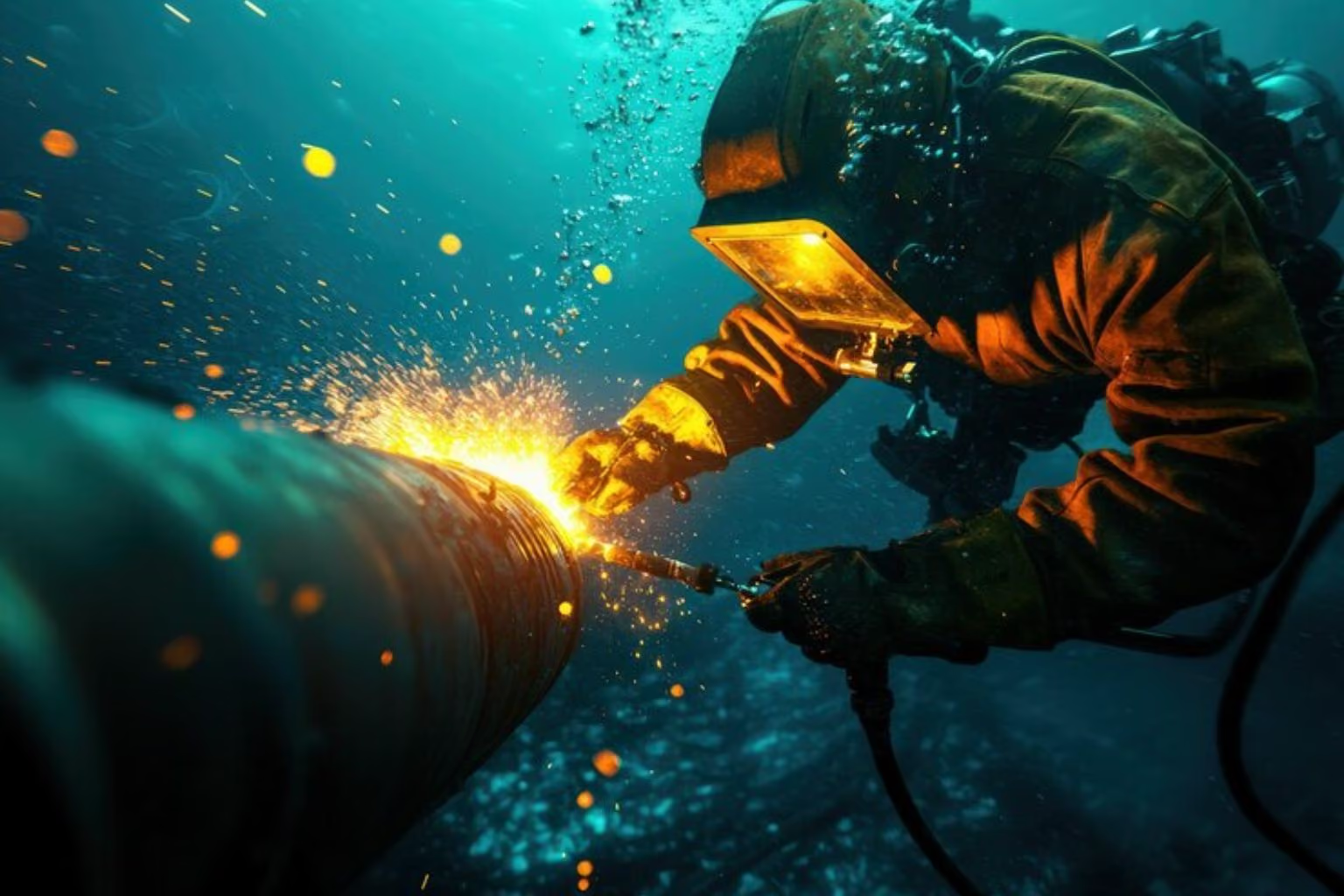
There is something almost unsettling about the silence that settles around a diver once they drop past the first few meters. Light thins out, sound thickens, and everything slows. That quiet can fool even seasoned professionals. It looks peaceful, but it hides hazards that make deep sea welding one of the most demanding technical crafts. Anyone stepping into that space is expected to blend precision, restraint, and the sort of awareness that feels a bit instinctive after years in the water.
Experienced divers often say that the job is less about brute skill and more about managing variables that shift without warning. Some welders move through the prep phase carefully. Others rush. The safer ones usually fall somewhere between those extremes because the ocean rarely rewards predictability. If anything, it forces welders to rethink routines they take for granted on land.
Surface welding has its own challenges, yet underwater work introduces something else. Pressure changes. Confined motion. Limited visibility that can drop to almost nothing. A sudden silt cloud can turn a steady weld bead into guesswork. Even simple tasks like adjusting welding clamps or checking the alignment of your welding torches feel different when gloves thicken, and currents drag your elbows a few degrees off center.
Some divers talk about a faint vibration that travels through the suit when electricity flows, even though modern systems minimize risk. Others describe the odd sense of distance that builds between their eyes and the workpiece. It does not sound serious, but that micro delay is where mistakes hide.
It seems obvious, yet mismatched gear still remains one of the most common contributors to underwater incidents. A diver needs layers of protection that respond well to pressure and movement. For instance, welding helmets must feel stable without locking the head in place. A tiny pinch point or stiff hinge restricts underwater motion far more than it does above water.
Then there are welding hoods that must fit well under the helmet system. Some welders prefer slimmer designs because they reduce drag when turning. Others want thicker, more resistant fabrics. Both choices make sense depending on the project depth and how long the diver expects to stay in position.
Visibility can collapse fast underwater. One misplaced fin kick and the bottom rises in a cloud. When that happens during deep sea welding, the welder has seconds to decide whether to continue or reposition. Many stop, let sediment settle, and check breathing rhythm before resuming. Others push through. The former usually delivers cleaner results and avoids micro-errors that would be painfully obvious once the weld is inspected.
Lighting also plays a role. Even strong lamps lose intensity with distance. The working angle of the torch can wash out visibility, so divers often adjust their head tilt instead of moving the arms.
There is a strange moment at depth where the body feels both heavy and slow, yet small movements become exaggerated in the water. Buoyancy changes everything. It adjusts posture and the ability to maintain a steady line. Because of this, welders often brace with one elbow against a surface. That stabilizing habit helps the arc stay consistent, especially while pushing the bead in delicate repairs.
It is believed that subtle buoyancy shifts also affect the way welders control heat. Too much movement and the torch wanders. Too little and the bead pools unevenly. Many welders learn a rhythm that feels almost intuitive, though it develops only after repeated dives.
Most underwater welding systems isolate electricity well, yet the potential hazard never disappears entirely. Skilled welders run manual checks without being asked. They examine connectors, look for odd micro bubbles rising near the cable, and test grounding. These habits protect the diver from the rare situations where equipment behaves unpredictably.
Cables under strain can behave strangely underwater. A slight kink on the surface becomes a pressure point at depth. Welders who work slowly during inspection usually spot these issues early.
Cold water drains energy fast. Welders often underestimate how quickly fatigue creeps in. When fatigue rises, reaction time drops. This is where proper thermal layers and suit integrity become vital. A steady temperature helps maintain fine motor control, which directly affects weld consistency.
Small leaks matter too. A tiny seam tear near the calf pulls cold water in and lowers body temperature. Some welders continue without reporting it, though that choice rarely ends well.
Even surface welders rely on controlled breathing at times. Underwater, it becomes almost essential. A diver who over-breathes disrupts buoyancy, shifts posture, and loses line stability. Controlled breathing does more than manage oxygen; it anchors the welder during tricky repairs.
Divers often find that a slow inhale before striking the arc helps fix their position. It seems minor, yet it makes the difference between a clean start and a wandering bead.
Even with strong training, deep sea welding still carries unpredictability. No checklist removes that. Some conditions shift mid-task. A mild current turns aggressive. A torch handle stiffens. A clamp slips. Professionals understand that small inconsistencies build over the course of a dive. The skill lies in recognizing them early.
Welders who admit what they do not fully know usually operate more safely. That small hesitation fosters vigilance.
If you have reached this point, you are probably rethinking part of your setup already. Some welders look for gear that has been tested in real environments. If that is on your mind, Tentacle Tools are worth a glance. The brand grew from welders who kept designing tools they wished they had on the job. Their apparel, clamps, and accessories are built from hands-on field experience. Nothing flashy, just gear aimed at making the work more manageable for people who spend long hours in demanding environments.
Upgrade Your Workday – Explore Tentacle Tools Now
Safety grows from routine. Not a rigid routine but deliberate habits that adjust as conditions change. Slow equipment checks. Consistent breathing. Realistic expectations about visibility. Respect for electrical limits. And patience with buoyancy shifts. When welders integrate these steps, the job becomes steadier.
Some look at deep sea welding as a high-risk specialty. Others view it as a precise craft shaped by experience. Both perspectives hold truth.
What is the biggest safety risk in deep sea welding?
Visibility changes and pressure effects often pose the greatest combined challenge.
How often should a diver inspect welding gear before a dive?
Every session. Quick checks reduce avoidable issues.
Do welding helmets fog more underwater?
They can. Anti-fog coatings or inserts help maintain clarity.
Are welding sleeves necessary for underwater work?
Yes. They protect skin from abrasion and torch heat.
Why does buoyancy affect welding technique?
Even minor posture changes shift the arc and heat distribution.
Deep sea welding asks for a kind of awareness that sharpens over time. The more a welder learns to read the environment, the safer and cleaner the work becomes. It is a field that rewards patience, flexibility, and a willingness to question your assumptions while still underwater.
Explore insights, tips, and trends in tech and productivity!