

Salt, moisture, confined spaces, and volatile fuels change everything. The safety gear that keeps offshore and deep sea welders protected.
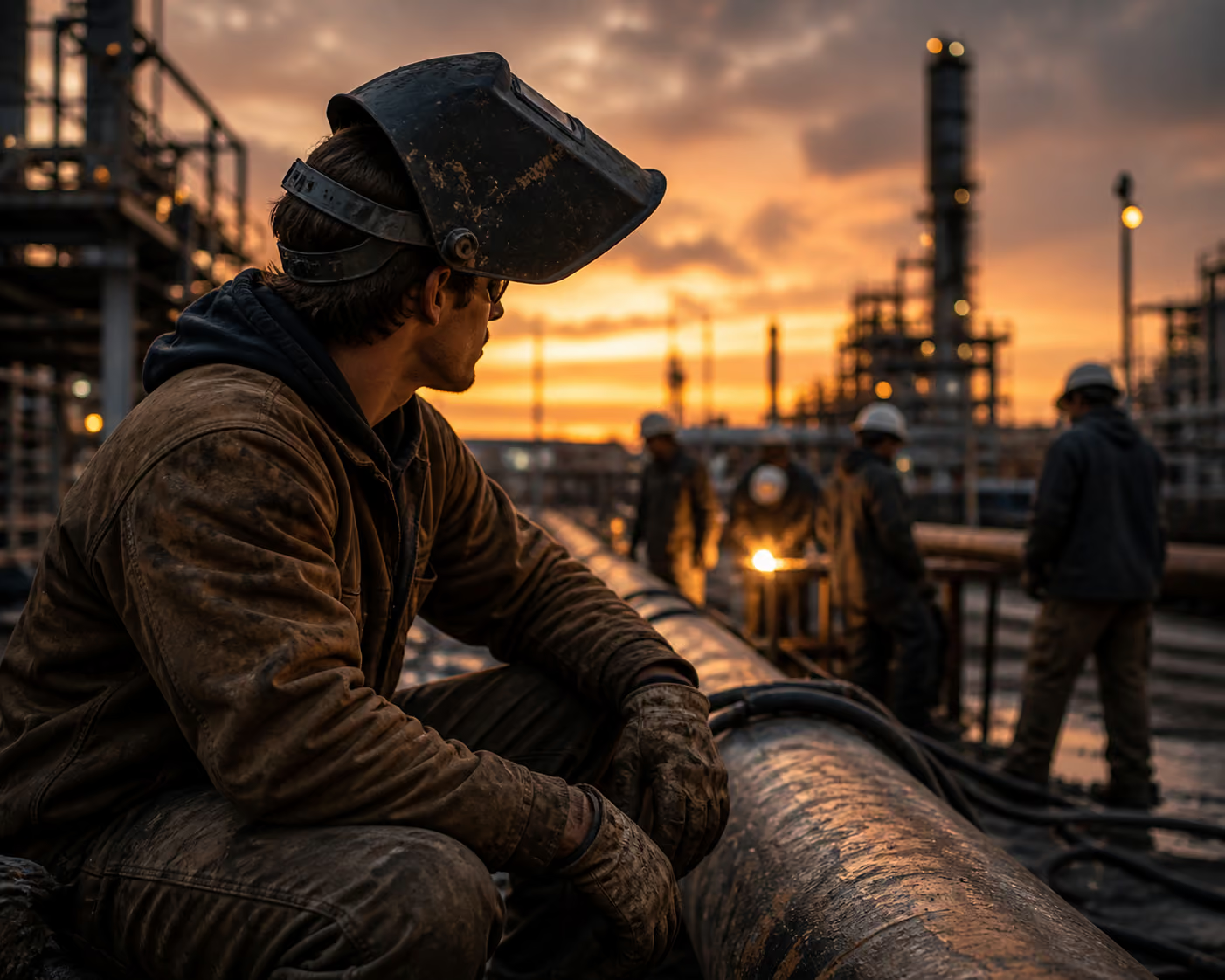
Steel behaves differently offshore due to salt, moisture, and confined, high-risk conditions. Add pressurized systems and volatile fuels, and welding becomes far more complex. The margin for error is minimal.
Standard shop PPE isn’t enough. Offshore welding safety gear must address conductivity, corrosion, moisture, and limited escape routes. In these environments, cutting corners carries serious consequences.
Underwater welding introduces pressure variables that most surface welders never encounter. In hyperbaric chambers or saturation systems, equipment must tolerate compression without material degradation. Plastics grow brittle, seals weaken, and components that seem fine at the surface may fail quietly at depth.
Salt doesn’t just rust tools. It attacks seams, fasteners, stitching, lens coatings, and even electrical insulation. Welding helmets, cables, gloves, and harness hardware all degrade faster offshore. Marine-grade materials are essential for safe offshore welding operations.
Oil platforms and gas processing systems contain flammable vapors. A stray spark can escalate rapidly. Welding aprons and flame-resistant clothing must meet appropriate FR ratings, and ignition-resistant materials become critical. Welding curtains used for spark containment must also withstand wind and humidity without collapsing or melting.
Ship hulls, ballast tanks, and platform understructures rarely provide open exits. Confined space welding increases heat stress and fume concentration. Respiratory protection and fall protection are often integrated into a single safety system.
Offshore-grade welding safety gear isn’t about brand labels. It’s about performance under stress.
Welding helmets offshore must offer reliable auto-darkening filters, strong lens seals, and resistance to moisture intrusion. Lens clarity matters more than people admit. Poor optics increase fatigue and misreads in low-light marine environments.
Corrosion-resistant hardware and replaceable lens systems extend usability. In rough weather, helmets get knocked around. Durability isn’t a marketing term here; it’s operational.
FR shirts and welding sleeves should carry proper ratings for arc flash protection. Offshore wind can funnel sparks under loose garments. Tight-weave fabrics with reinforced stitching hold up better. Synthetic blends without FR treatment are a liability.
Welding aprons provide extra torso shielding when overhead welding is involved, especially during structural reinforcement work.
Moisture and electricity don’t mix. Goatskin TIG gloves designed for dexterity must still maintain insulation integrity. Wet gloves reduce protection and increase shock risk. Offshore teams often rotate glove sets to allow drying cycles.
Metal grating, wet decks, hydraulic fluid spills. Slip resistance matters as much as toe protection. Electrical hazard ratings add another layer of security.
Confined offshore welding environments trap fumes. Supplied air respirators are common in enclosed sections. Filtration systems must match expected contaminants, especially when working around coatings or composite materials.
Harness systems should use corrosion-resistant buckles and inspected webbing. Salt exposure degrades fibers faster than most assume. Routine inspection cycles need to be tighter offshore than on land-based sites.
If your operation hasn’t reviewed its welding safety gear inventory recently, it may be worth scheduling an internal audit before the next deployment.
Underwater welding introduces entirely different systems.
Commercial diving helmets integrate communication, breathing gas supply, and welding face protection. Visibility is inherently limited, and lens fogging can quickly become a serious operational issue.
Electrode stingers designed for wet welding include insulated grips and sealing mechanisms. Inferior holders increase shock risk dramatically.
Cable sheathing must withstand abrasion against ship hulls and subsea structures. Micro-cracks allow water intrusion and current leakage.
Deep-sea welders rely on a topside air supply. Backup redundancy systems are standard. Equipment failure in these conditions carries serious consequences.
Compensation often reflects these risks. The oil rig underwater welder salary tends to be significantly higher than land-based welding roles, partly due to skill demand and partly due to exposure to compounded hazards.
Regulatory oversight varies by jurisdiction, though several frameworks commonly apply.
In U.S.-regulated waters, OSHA provides baseline PPE and confined space rules. Offshore operators typically exceed minimums due to insurance and liability pressures.
The American Welding Society outlines procedural and safety considerations specific to underwater welding. These guidelines influence training standards worldwide.
Operators often adopt internal safety management systems that exceed regulatory requirements. Regular audits, detailed documentation, and full equipment traceability are standard. While compliance alone doesn’t ensure safety, failure to comply clearly raises risk.
Not all offshore jobs look alike.
Explosion-resistant gear and anti-static materials are prioritized. Welding curtains must contain sparks in windy conditions. Equipment redundancy is common.
Dockside welding introduces tidal exposure and confined tank work. Respiratory systems and welding sleeves with added abrasion resistance are often necessary.
Mobility matters. Lightweight but durable welding helmets reduce neck strain during extended shifts.
Integrated dive systems dominate. Specialized welding safety gear replaces standard PPE almost entirely.
Selection depends on environment, task frequency, and crew experience. Generic kits rarely fit every scenario well.
Most of these incidents involve some lapse in welding safety gear selection, inspection, or use. Rarely is it one dramatic failure. More often, small oversights stack up.
Fragmented sourcing can lead to mismatched ratings, materials, and inspection gaps. Bundled offshore PPE kits now offer corrosion-resistant helmets, FR apparel, welding aprons, curtains, and insulated gloves designed specifically for marine conditions.
Companies like Tentacle Tools focus on practical durability, tested by welders and engineers in the field. Consolidated kits simplify replacement cycles and bulk orders.
Before deployment, ensure your offshore welding gear is marine-rated, not just adapted from shop use. Consulting a specialized supplier can prevent costly mistakes.
Upgrade Your Welding Setup Today—Choose Gear Designed by Professionals for Professionals.
Salt exposure cleaning should happen more frequently than standard weekly cycles. Freshwater rinses help, though drying protocols are equally important.
Helmet lenses degrade faster offshore. Keeping spare lenses on hand prevents risky improvisation.
Harness webbing inspections should be documented and performed at shorter intervals than land-based equivalents.
Storage is often overlooked. Damp lockers accelerate corrosion. Ventilated, sealed containers reduce long-term damage.
Neglect tends to show up at the worst time. A cracked cable sheath or weakened buckle rarely announces itself loudly.
Offshore welding compresses risk into tighter spaces. Offshore welding involves pressure, moisture, flammable systems, and limited escape routes. Welding safety gear becomes less about compliance and more about survival margin.
It may be tempting to assume that high compensation, including the well-known oil rig underwater welder salary premiums, offsets the hazards. Financial reward doesn’t neutralize risk. Preparation does.
Evaluate your equipment. Question its marine readiness. Replace what’s questionable before the next mobilization.
The ocean doesn’t forgive shortcuts.
1. How often should offshore welding safety gear be inspected?
More frequently than land-based gear. Weekly visual checks and documented monthly inspections are common.
2. Are standard welding helmets suitable offshore?
Not always. Marine environments require moisture resistance and corrosion-resistant hardware.
3. Why are welding curtains important offshore?
They contain sparks in windy conditions and help reduce fire risk around flammable systems.
4. Does underwater welding require different gloves?
Yes. Waterproof, insulated systems are essential to reduce shock risk.
5. Is the higher oil rig underwater welder salary due to risk?
Partly. It reflects specialized skill, certification requirements, and exposure to compounded hazards.
Explore insights, tips, and trends in tech and productivity!