

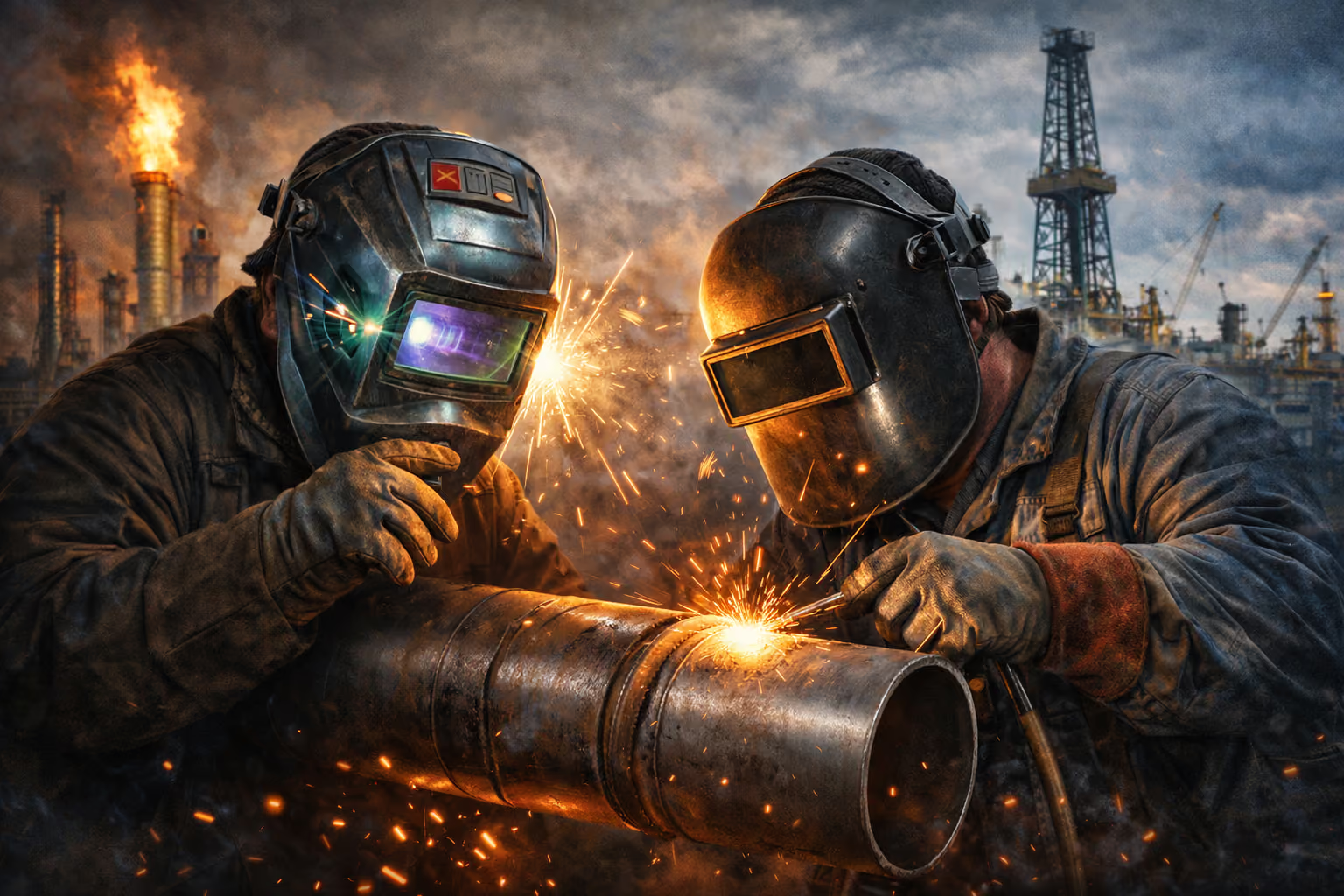
Auto-darkening helmets changed the game — but not always for your eyes. Why fixed shade lenses still win for long-term eye health.
Auto-darkening welding helmets changed the game. No more nodding your hood, better visibility during setup, and faster tacks. Convenience-wise, they’re hard to beat. But convenience doesn’t always mean better—especially when we’re talking about your eyesight.
For welders who spend long hours under the hood, auto-darkening lenses can create problems that fixed shade lenses simply don’t.
Let’s break it down.
Auto-darkening lenses rely on sensors and liquid crystal filters to detect the arc and darken the lens. Even the best lenses have a reaction delay, usually measured in milliseconds.
That sounds tiny—but your eyes are extremely sensitive to intense light.
Every single arc strike:
A fixed shade lens?
Your eyes don’t care about milliseconds. They care about repetition.
Auto-darkening lenses constantly adjust based on:
That means your eyes are constantly refocusing and adapting.
This can lead to:
A fixed shade lens:
Consistency matters more than clarity when it comes to eye health.
In the real world, sensors get blocked by:
When a sensor is blocked:
That brief exposure is enough to cause arc eye, even if you don’t feel it immediately.
A fixed shade lens doesn’t care about sensors.
It’s dark no matter what position you’re in.
Auto-darkening lenses depend on:
All things that eventually fail.
Dead battery. Bad connection. Cold weather. Long shutdowns.
When that happens, you might strike an arc thinking you’re protected—until it’s too late.
A fixed shade lens:
Old tech, but it never quits.
Auto-darkening lenses often advertise:
That’s great for seeing the puddle—but clarity doesn’t equal comfort.
The layered electronics in auto lenses can:
A quality fixed shade glass lens:
That’s why many old-school welders still swear by them.
Auto-darkening helmets are fine for:
But for:
The constant micro-exposures, flicker, and adjustment can wear your eyes down fast.
Fixed shade lenses are boring—but boring is good when it comes to eye health.
Pros:
Cons:
But your eyes don’t care about convenience.
They care about protection.
Auto-darkening lenses didn’t replace fixed shade lenses because they’re better for your eyes.
They replaced them because they’re more convenient.
If you weld for a living—and especially if you weld all day—your eyes are your paycheck.
Fixed shade lenses may feel old-school, but when it comes to long-term eye health, consistency and reliability beat electronics every time.
Your vision isn’t replaceable.
Your hood is.
Explore insights, tips, and trends in tech and productivity!