

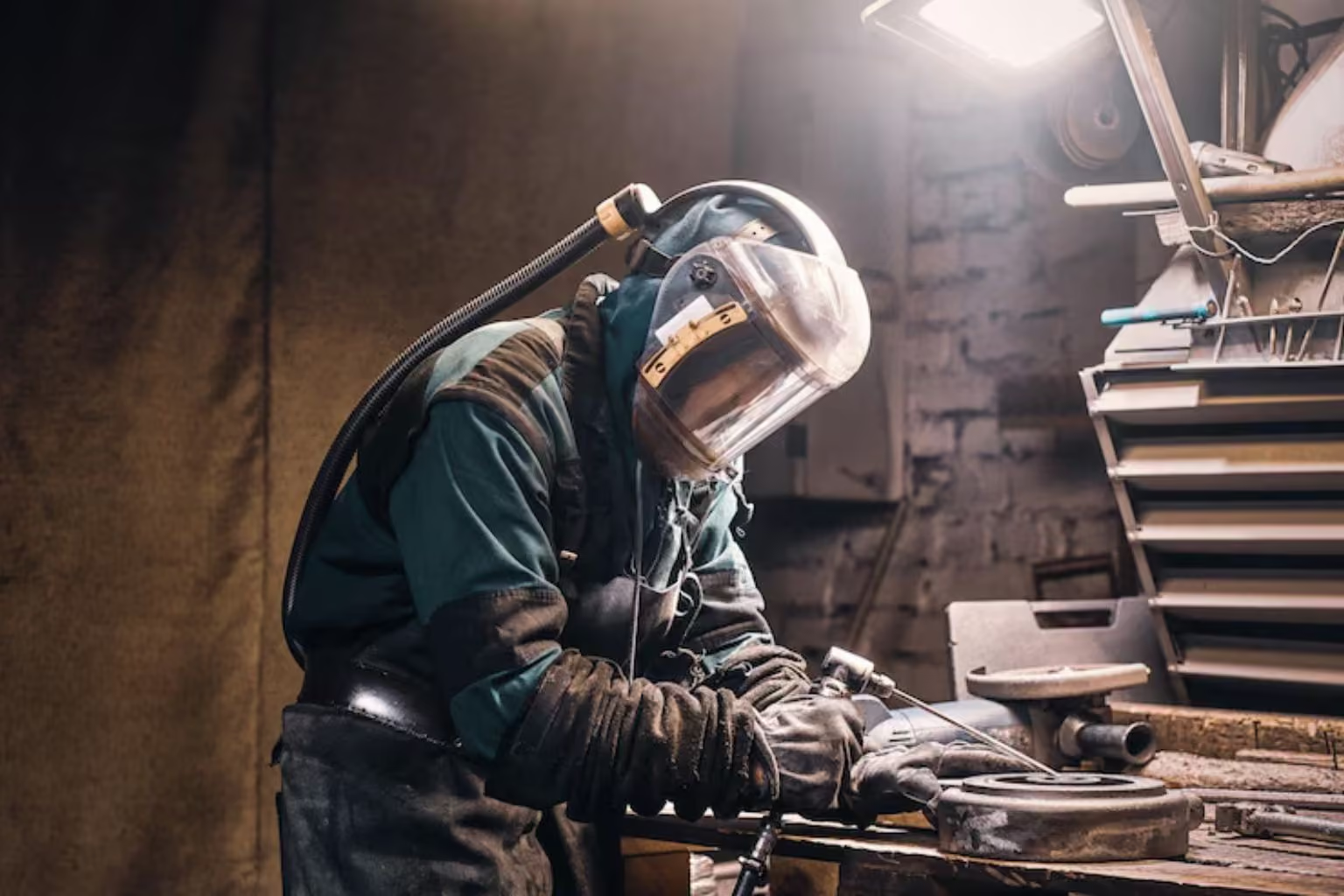
Learn why proper welding PPE gear matters, what to use, and how it protects welders from real jobsite risks.
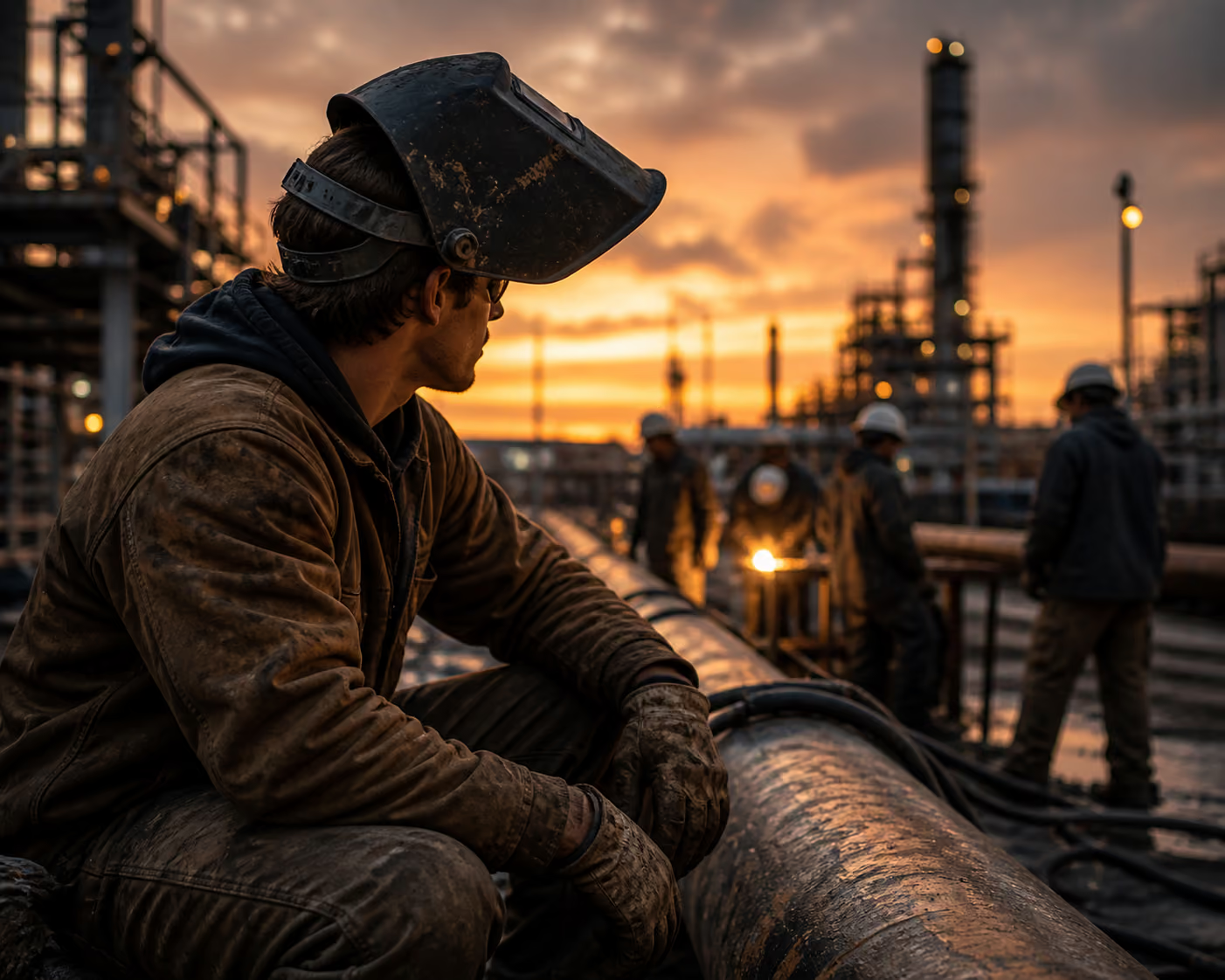
Sparks fly, light flares from white to blue, and heat radiates off the weld puddle in waves you can feel through fabric. Anyone who has worked behind a torch knows this scene well. What is often underestimated is how quickly that environment becomes dangerous when welding PPE is incomplete, worn, or chosen without care.
Protection in welding is not a box-ticking exercise. It is closer to risk management, shaped by material, position, amperage, and even how long the job lasts. Some gear works well in one situation and poorly in another. That nuance often gets lost.
This article looks closely at welding PPE gear that supports visibility, movement, and long-term health.
Why Welding PPE Gear Is Not Optional
Burns and arc eye are the obvious dangers. Less visible issues take longer to surface. Skin damage from UV exposure. Gradual hearing loss. Chronic neck strain from poorly balanced helmets.
Welding PPE gear exists to reduce these risks, not eliminate them entirely. Even the best welding safety gear only works when it fits the task and is used correctly. Improper gear can create a false sense of security, which may be worse than none at all.
Regulatory bodies often set minimum standards. Experienced welders usually exceed them. There is a reason for that.
Welding helmets are the most recognizable part of welding safety gear. They protect eyes and face from arc flash, spatter, and infrared radiation. Auto darkening filters have improved productivity and reduced neck strain, though they are not flawless.
Sensors can fail in low angle or obstructed positions. Battery neglect still happens. Passive helmets, while less convenient, remain dependable in harsh conditions. Many professionals keep both.
Clarity matters as much as shade rating. Poor optics increases eye fatigue and makes weld defects harder to spot, which indirectly affects safety.
Welding hoods extend protection beyond the helmet shell. They shield ears, neck, and sometimes shoulders from sparks and UV exposure. In overhead or out of position work, this extra layer becomes essential.
Some hoods restrict airflow. That tradeoff may be acceptable in short welds, less so during long sessions. Heat stress is a real concern, especially in confined spaces.
Flame resistant clothing is central to welding PPE gear. Cotton treated for FR use remains common, while leather dominates in high spatter environments.
Welding sleeves serve a specific role. They protect forearms without adding bulk to the torso. For TIG work, sleeves often provide enough protection while preserving dexterity.
Synthetic blends are best avoided unless specifically rated. Melted fabric against skin causes injuries that are difficult to treat.
Welding aprons protect the torso and thighs where spatter tends to collect. They are especially useful at benches or during grinding tasks that accompany welding.
Leather aprons last, though they add weight. Fatigue becomes a factor over long shifts. Lighter options exist, but durability varies.
Gloves are a compromise. Thick gloves protect against heat and spatter, but reduce control. Thin gloves improve feel, yet increase burn risk.
The right choice depends on the process. MIG welding usually tolerates heavier gloves. TIG welding often demands finer control. Good welding PPE gear adapts to that reality rather than forcing one solution.
Gloves also wear unevenly, pinholes form, and seams can fail. Regular inspection is essential for safety, even if it feels routine.
Boots often go unnoticed until a problem arises. Sparks fly, slag rolls, and while steel toes protect against impact, metatarsal guards provide an extra layer of safety.
Pant cuffs should not trap sparks. Straight leg designs work better than flared styles. Leather spats offer extra defense in heavy spatter environments, though mobility decreases slightly.
Again, welding PPE gear involves tradeoffs.
Welding curtains protect others in the workspace. They block arc flash and contain sparks, reducing secondary injuries.
Curtains vary in transparency and heat resistance. Cheap versions discolor quickly, limiting visibility. Higher quality curtains maintain clarity longer, which helps supervisors monitor work safely.
Curtains do not replace proper spacing or ventilation. They complement it.
Poorly fitting welding PPE gear increases strain. Helmets that pull forward strain the neck. Heavy jackets restrict movement. Gloves that pinch reduce circulation.
Over time, discomfort leads to shortcuts. Sleeves get rolled. Hoods pushed back. That is where injuries creep in.
Comfort is not a luxury. It supports compliance.
Certifications like ANSI and NFPA provide useful benchmarks. They do not account for every scenario. Welding upside down in a tight space tests gear differently than bench welding.
It is believed that many injuries occur not from the complete absence of PPE, but from mismatched gear. Rated does not always mean suitable.
Experience fills that gap, though learning the hard way is costly.
At some point, most professionals start looking for equipment designed by people who weld, not just manufacturers reading spec sheets. Tentacle Tools exist in that space. Their approach focuses on practical design, tested in real conditions, then adjusted. It is not about adding features, but removing friction from the job. For welders who value function over flash, that kind of thinking tends to resonate.
Upgrade your workflow with tools that work as hard as you do. Explore Tentacle Tools today.
Welding PPE naturally degrades over time. UV exposure weakens fabrics, leather stiffens, and helmet lenses become scratched.
Waiting until failure invites injury. Replacement schedules are rarely written down, yet seasoned welders sense when gear has reached its limit. That intuition comes from paying attention.
Proper cleaning is equally important. Contaminated gear can ignite more easily or lose protective properties.
What is the most important welding PPE gear?
Eye and face protection ranks highest due to arc flash and radiation exposure risks.
Do welding helmets expire?
Helmets do not expire, but lenses, sensors, and headgear wear out and should be replaced.
Are welding sleeves enough for protection?
They work for low spatter tasks, but full jackets offer broader protection.
Why are welding curtains necessary?
They protect nearby workers from arc flash and contain sparks.
How often should welding PPE be replaced?
Replacement depends on wear, exposure, and damage rather than fixed timelines.
No piece of welding PPE gear works in isolation. Safety is layered, adjusted, and sometimes improvised within reason. Awareness fills the gaps that equipment cannot.
Even then, conditions change. Materials vary. Fatigue sets in. Staying alert matters as much as any helmet or glove.
And that balance, between protection and practicality, is never quite finished.
Straight talk on welding careers, pay, tools and life on the road.