

A practical look at 2026 welding safety innovations, from smart PPE to cobots, and what they mean for real job sites.
Walk through any active weld shop, and the risks are obvious. Heat shimmer in the air. The metallic smell of fresh welds. Sparks bouncing farther than expected. Most hazards are familiar, yet the way the industry responds to them is changing, sometimes quietly, sometimes fast. By 2026, welding safety will look less like a checklist and more like an integrated system where tools, training, and people adapt in real time. The shift affects how welding safety gear is designed, chosen, and actually used on the job.
Despite decades of standards and improvements, welding remains one of the more injury-prone trades. Burns, eye damage, fume exposure, and repetitive strain injuries continue to show up in reports. It appears that many incidents are less about negligence and more about gaps between conditions and equipment. Older welding safety gear often assumed predictable environments. Job sites rarely cooperate.
What is driving innovation now is not novelty. It is pressure from tighter regulations, labor shortages, and rising insurance scrutiny. Shops want fewer incidents. Welders want gear that does not slow them down. That tension is shaping the next wave of solutions.
A noticeable trend going into 2026 is convergence. Safety is no longer handled by a single product. Welding safety gear now overlaps with software, sensors, and automation. Search behavior reflects that shift. Buyers are looking for future-proof investments, not replacements every year.
Another factor is accessibility. Technology that once belonged only to large fabrication facilities is showing up in small shops. The question is not whether innovation exists. It is whether it fits the way welders actually work.
Collaborative robots, or cobots, are not new. What is new is their safety intelligence. Unlike traditional robotic arms locked behind cages, modern cobots operate alongside welders. Built-in force limiting and proximity sensors allow them to stop or slow when a person enters their workspace.
This reduces strain injuries and exposure during repetitive welds. It does not remove the welder. It changes the role. For many shops, that distinction matters.
Small fabrication shops are starting to use cobots for consistent joints or long runs. In industrial settings, they handle high-heat welds where exposure time matters. The safety benefit is indirect but real. Less time in awkward positions means fewer long-term injuries.
Traditional safety training relies on manuals and brief demonstrations. Retention is uneven. Virtual reality training places welders in simulated environments where mistakes are safe but memorable. Sparks fly, alarms blare, and the consequences feel immediate, making the lessons stick.
It is believed that this kind of exposure reduces real-world accidents, particularly for newer workers.
Some companies integrate VR modules into onboarding. Others use it for refreshers after incidents. AR overlays are also appearing in welding helmets, guiding torch angles, or warning of proximity hazards. This does not replace experience, but it may shorten the learning curve.
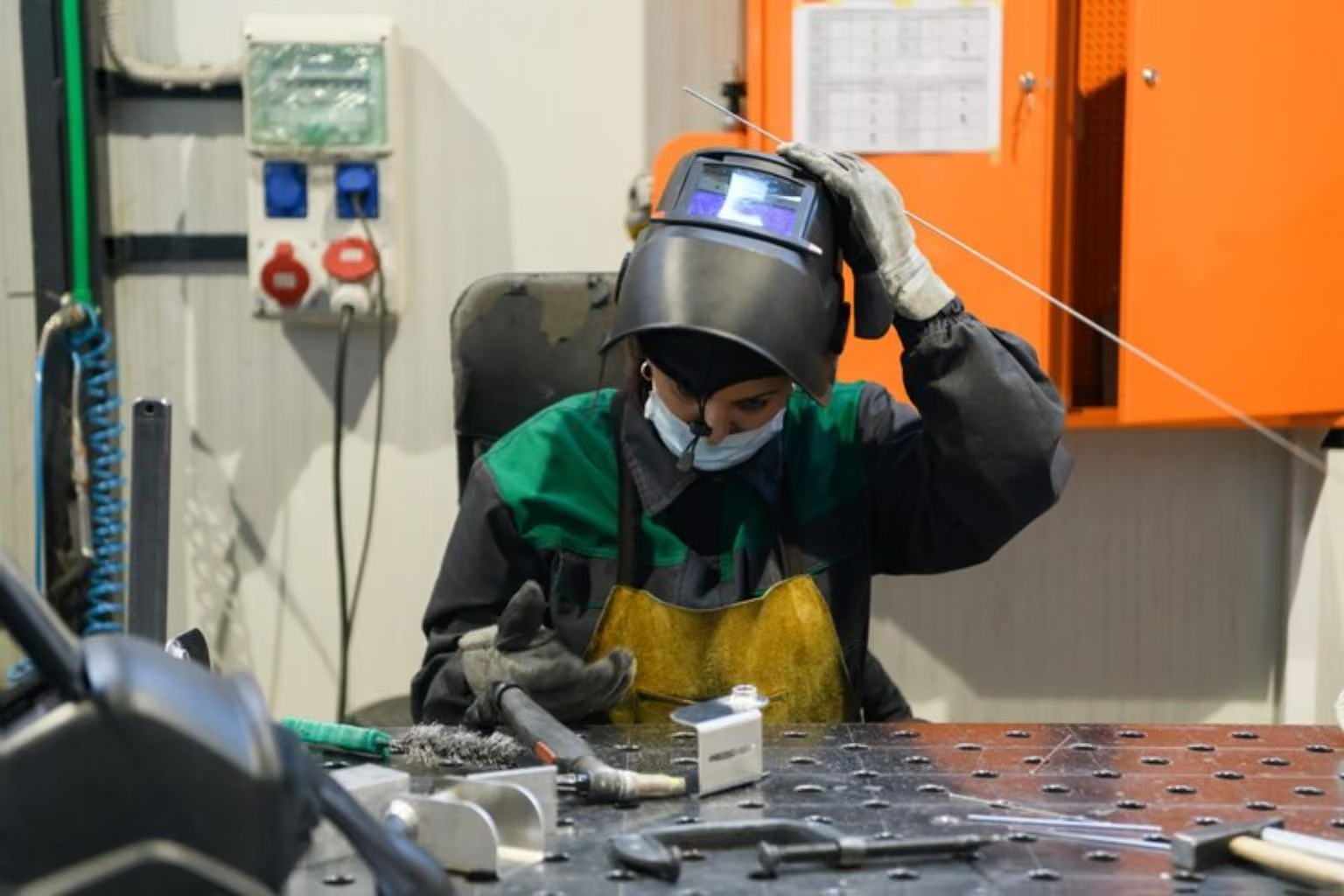
Auto-darkening lenses are now standard, but smart welding helmets go further. Sensors track arc time, exposure levels, and even head position. Some models integrate basic AR displays. The goal is awareness, not distraction.
Welding hoods are also evolving. Improved airflow design and lighter materials reduce fatigue, which indirectly improves safety.
Smart PPE extends to gloves and garments. Welding sleeves and welding aprons with embedded temperature indicators are being tested. They warn before heat buildup becomes dangerous. This kind of feedback shifts welding safety gear from passive to responsive.
For welders who spend hours under the hood, that difference adds up.
Fume extraction has long been an issue. Fixed systems often miss temporary setups or field work. New IoT-based sensors track gas levels, temperature spikes, and airflow. Alerts trigger before conditions become critical.
In some facilities, systems can initiate partial shutdowns or activate fire suppression automatically. The technology is mature enough to be reliable, though cost remains a consideration.
All of this automation depends on consistent power. Ventilation, cameras, sensors, and even charging stations for advanced welding safety gear fail quietly when power drops. Brands like Tentacle Tools often emphasize durability and reliability for this reason. Tools and systems are only as safe as their weakest link.
This is a good point to assess whether backup power solutions are part of the safety conversation. Many shops overlook it until something goes wrong.
If your facility relies on automated safety systems, it may be time to review how power continuity is handled before expanding further.
Portable welders are shedding weight while gaining intelligence. Battery-powered units now include real-time monitoring of voltage, duty cycle, and environmental conditions. Alerts warn operators before unsafe operation thresholds are crossed.
For field welders, this matters. Conditions change quickly. Equipment that responds helps prevent mistakes under pressure.
The best systems keep data simple. Overloaded dashboards are often ignored. What works best is focused feedback: too hot, too long, stop. This kind of clear, concise guidance aligns naturally with how welders think on the job.
AI-driven defect detection is improving. Cameras analyze welds as they happen, flagging issues that could lead to rework or failure. Safety improves indirectly through fewer rushed corrections.
Remote welding for hazardous environments is also advancing. It is not widespread yet. Costs and complexity remain barriers. Still, the direction is clear.
Technology helps, but it does not replace judgment. Welding safety gear works best when it respects workflow rather than fighting it. That balance will likely define which innovations last.
Not every shop needs every solution. It may be smarter to invest incrementally. Start with gear and systems that solve existing pain points. Expand when adoption feels natural, not forced.
Consider a safety system audit that looks at equipment, power reliability, and training together. Small adjustments often reduce the biggest risks.
Are smart welding helmets worth the investment?
For many welders, yes. Added awareness can reduce fatigue and long-term strain.
Do cobots replace welders?
Unlikely. They tend to assist rather than replace, especially in skilled work.
Is VR safety training effective?
It appears to improve retention, particularly for new hires.
How often should environmental sensors be calibrated?
Most manufacturers recommend quarterly checks, though conditions vary.
Does upgrading welding safety gear lower insurance costs?
In some cases. Insurers often look favorably on documented safety improvements.
Welding safety in 2026 looks less dramatic than expected. No radical overhaul. No single breakthrough. Instead, a steady layering of smarter welding safety gear, better data, and more realistic training. Progress appears incremental, sometimes uneven, but directionally sound. The question is not whether these innovations will arrive. It is how deliberately shops choose to adopt them.
Explore insights, tips, and trends in tech and productivity!