

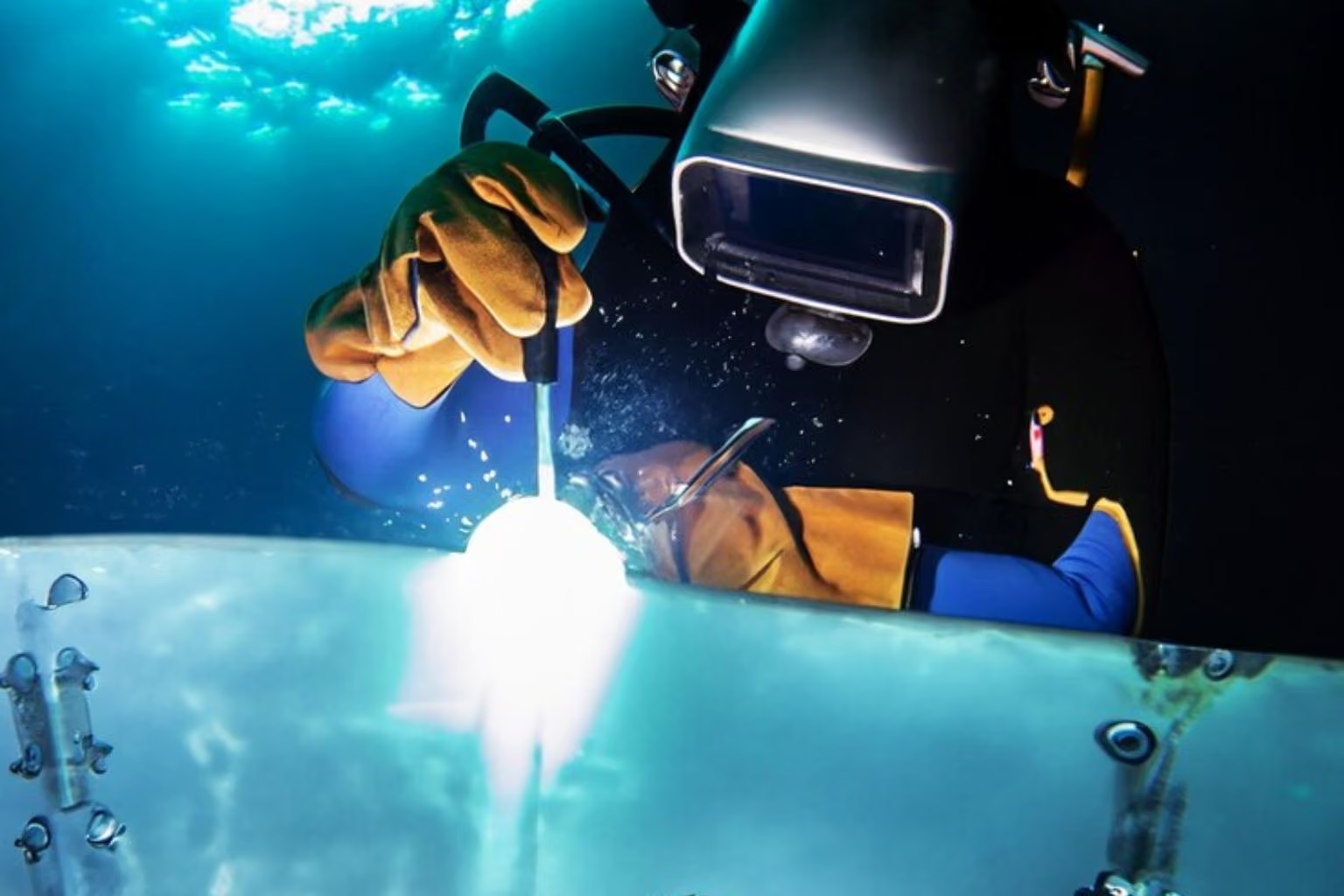
A detailed guide to underwater Welding Gear, key tools, safety considerations, and expert insights that support divers and welders onsite.
A diver may focus on the water at first, but seconds later, the mind shifts to what’s in the tool kit, what’s missing, and what could fail. Every underwater welding job begins with that quiet assessment, shaping the entire operation.
The right welding gear won’t guarantee perfection, but it prevents small mistakes from becoming major problems. On paper, the equipment list looks simple, but the underwater reality is layered vision, sound, vibration, and tool feedback. Even a slight tremor in a rod or helmet shift reveals itself quickly.
Studying underwater welding gear is never complete. There’s always another insight, another tool, another way to tighten safety margins.
Different facilities use different combinations, but certain tools appear in nearly every conversation about underwater welding gear. Welders call them the foundation items that go into the water every time.
Yet essentials on land don’t always translate underwater. Welding rods behave differently when wet, electrodes may feel inconsistent, and wire feeders face more resistance. Welders adjust their approach in the first minutes based on how tools respond.
Below is a table detailing core items frequently associated with underwater welding gear. Each plays its own role depending on experience and environment.
The Role of Environmental Conditions in Gear Selection
Water often behaves in ways that welders do not fully prepare for. Visibility may shift hour to hour. One minute, the steel structure appears clear; the next, it turns into a silhouette. Under such conditions, underwater welding gear becomes more than a toolbox. It becomes the welder’s extended senses.
Fogging inside welding helmets is common, and so is unexpected current vibration against welding hoods. Many welders develop habits to compensate. Some tap the frame lightly to shift condensation. Others angle the arc differently when welding electrodes sputter near cold surfaces. These are small adjustments, but underwater, small adjustments add up to job safety.
There is a texture to submerged metal that land-based welders rarely talk about. Surfaces that look smooth above water can feel almost gritty once submerged. This affects the performance of welding grinder tools more than many expect. If the surface is coated in algae or soft bio growth, the grinder may chatter. A welder may need to switch to a different wheel or alter pressure. Again, underwater welding gear is only as effective as the conditions it faces.
Welding rods may burn faster. Welding electrodes may arc slightly sideways. Metal distortion can surprise even experienced teams. These factors encourage a mindset that remains flexible, not fixed.
Some welders say the faint crackling through gloves acts like a second indicator. Others focus on helmet sound, almost like listening for a distant echo. Sensory input is limited underwater, yet welders find creative ways to compensate with equipment placement and grip adjustments.
Good underwater welding gear supports this process by allowing welders to make micro corrections. Welding pliers with a balanced handle or a welding wire feeder with smooth tension help reduce strain over long dives. When tools feel predictable, welders can devote more focus to the arc itself.
There is a growing interest in underwater welding gear that prioritizes comfort and durability rather than raw power. Welders often work long shifts, and fatigue increases risk. Welders mention that certain welding hoods press unevenly as pressure increases. Older gloves may stiffen in cold water. Welding safety gear with better stitching can reduce hand strain.
Some organizations are testing advanced coatings for welding electrodes to achieve more consistent arc stability underwater. Results vary, but progress continues. Welders tend to be skeptical until a tool proves itself through repeated use.
What happens after the gear leaves the water is almost as important as what happens inside it. Saltwater residue can shorten the life of welding tables, corrode tools, and weaken electrical connections. Welders with long tenure often describe maintenance as a rhythm. Rinse. Inspect. Rinse again. Allow air to reach every surface.
A small crack in a handle or a frayed cable can create issues later. Realistically, underwater welding gear faces more strain than typical topside equipment. Care becomes part of the craft.
A structured checklist can make any underwater job smoother. Yet every welder knows a checklist is only a guide. Judgment fills the gaps. If underwater welding gear feels reliable in hand, confidence builds. If not, hesitation slows the work. Small delays are acceptable. Unsafe assumptions are not.
Try keeping a log of which welding rods behaved well at specific depths. Monitor how your welding wire feeder responds in colder currents. Over time, it forms a pattern that helps inform future dives.
Thinking about updating worn tools before your next dive. It helps to look at brands built by people who actually weld for a living. Tentacle Tools is worth noting. Their products are designed by a double time welder and an engineer who tested each item in real field conditions. Some welders appreciate that approach. It keeps the focus on practicality, not trends
Upgrade to tools designed by real welders for real conditions—explore Tentacle Tools today and dive with confidence.”
1. What is the biggest challenge with underwater Welding Gear
Visibility fluctuations and tool behavior under pressure often rank as the main concerns.
2. Do welding rods work the same underwater as on land
Not exactly. They may burn faster or react differently with cold surfaces.
3. Why do welding helmets fog underwater
Temperature shifts, humidity, and restricted airflow contribute to fogging.
4. Are welding grinder tools commonly used underwater
Yes, though performance varies with surface texture and growth on the metal.
5. Can welding tables be used underwater
Rarely. Most welders use them only at prep stations before entering the water.
Underwater environments change, sometimes in subtle ways. So does the gear. Underwater welding gear evolves as welders experiment, adapt, and refine their approaches. What works flawlessly today might require a new technique tomorrow. That is the nature of the job, and part of its appeal.
Two takeaways seem to stand out. Keep learning, and keep your tools in honest condition. Work under the surface is never static.
Explore insights, tips, and trends in tech and productivity!