

Understand hyperbaric welding salary, risks, pay factors, and career outlook in offshore underwater welding.
Walk onto any offshore project deck at dawn, and the tension is palpable. Steel groans under load, salt mist settles on equipment, and every task carries consequence. In that environment, a hyperbaric welding salary stops feeling like a number on paper. It begins to look more like compensation for exposure, precision, and controlled risk.
Few trades combine engineering judgment and physical endurance as underwater welding does. Even fewer command earnings that rival senior technical roles on land. Yet the fascination persists. Why does hyperbaric welding pay what it does, and is the premium justified once reality sets in?
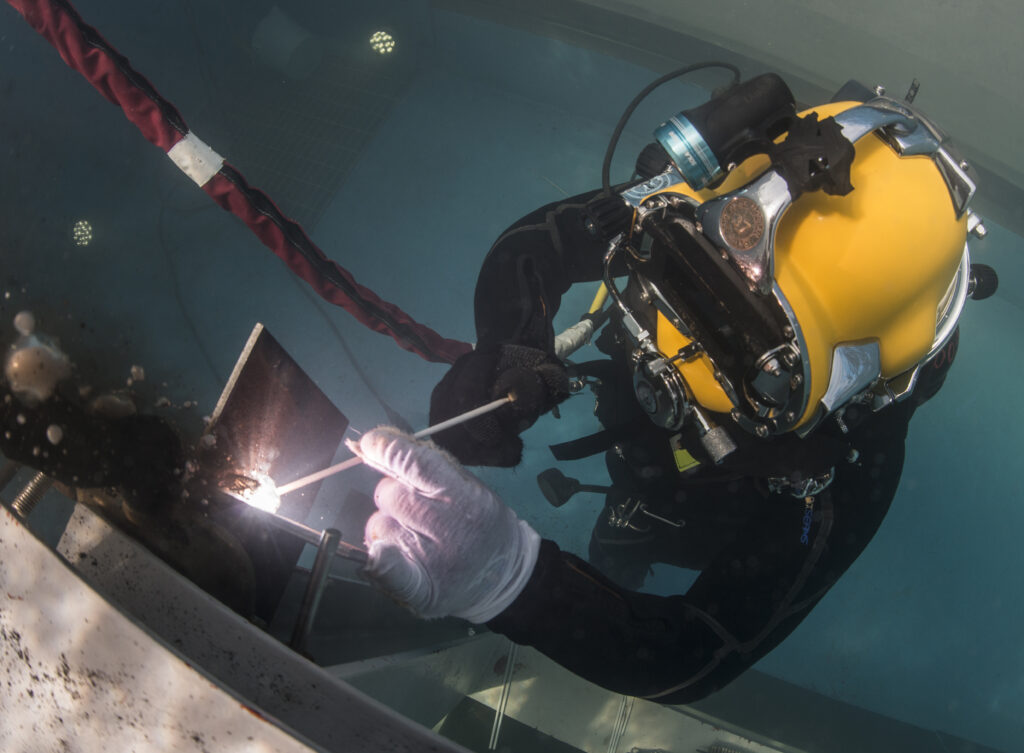
Hyperbaric welding refers to welding performed in a dry, pressurized enclosure beneath the water’s surface. The diver works inside a sealed chamber where atmospheric conditions are manipulated to allow stable welds. It is technical, demanding, and surprisingly methodical.
Most assignments involve subsea pipeline maintenance or structural reinforcement on offshore installations. When a joint fails at depth, delay is not merely inconvenient. It can halt production worth millions. That urgency shapes the hyperbaric welding salary structure more than many realize.
Numbers vary widely, often shaped by contract type and offshore rotation schedules. Still, patterns emerge with experience and certification progression.
Entry-Level Compensation: Early career professionals may see a hyperbaric welding salary range between $40,000 and $70,000 annually, which often includes sporadic project assignments and limited depth exposure. Some observers question whether the risk justifies the initial pay scale, which is a fair point.
With consistent offshore deployments, earnings tend to rise into the $80,000 to $120,000 bracket. Depth allowances and specialized certifications influence the deep sea welder salary trajectory significantly.
Seasoned saturation divers occasionally exceed $150,000, and exceptional project intensity can push compensation beyond $200,000 in rare circumstances. This tier reflects both scarcity and accumulated operational trust.
Compensation is rarely arbitrary. It is a reflection of constraints, liabilities, and market demand.
Working under both literal and operational pressure introduces hazards uncommon in most other trades. Electrical exposure, decompression stress, and confined working environments contribute to what industry insiders call danger premium. The oil rig underwater welder salary typically embeds this premium as a baseline expectation.
An underwater diver welder blends two demanding professional disciplines. Commercial diving competence alone is challenging, and welding certification adds another layer, creating a narrow talent pool that drives wages upward.
Subsea repair errors can escalate quickly. A flawed weld might compromise structural integrity or disrupt energy supply chains. Stakeholders recognize that risk. Consequently, underwater welder hourly wage rates often reflect both skill and accountability.
Depth increments often trigger additional compensation. Offshore rotation bonuses further boost total income potential, while these incentives also acknowledge cumulative physiological strain.
No two career paths unfold identically in this field. Several variables shape earning potential.
Offshore deployments in regions with intensive energy extraction activity tend to command higher pay. Inland marine infrastructure work, by contrast, may offer steadier schedules but lower compensation.
Documented performance history influences future contract rates, as employers often prioritize reliability under pressure over raw technical ability.
Non-destructive testing credentials, saturation diving qualifications, and niche welding endorsements can increase a hyperbaric welding salary noticeably. Industry chatter suggests a 20 to 25 percent premium is not unusual.
Large energy conglomerates often offer structured benefits and predictable pay cycles. Smaller contractors may provide higher short-term project rates but less stability.
The financial appeal is obvious. Yet career longevity in this discipline is sometimes shorter than anticipated. Physical fatigue accumulates. Extended offshore rotations strain personal routines.
Job availability also fluctuates with energy market cycles. A booming oil sector may expand opportunities, then contract abruptly. Viewed pragmatically, the profession rewards commitment but rarely tolerates complacency.
The pathway combines formal training and incremental exposure to complex assignments.
A solid foundation in structural or pipe welding remains essential. Without it, subsea specialization offers a limited advantage.
Professional diving credentials establish operational readiness. Programs emphasize safety protocols, underwater navigation, and equipment maintenance.
Specialized welding certifications and inspection skills enhance employability. Employers often value diversified competencies during offshore mobilization planning.
Early assignments may involve support roles. Over time, familiarity with subsea systems builds credibility. Eventually, the hyperbaric welding salary potential begins to align with industry benchmarks.
Reliable gear underpins every successful subsea operation. Welding helmets designed for confined pressurized environments, precision inspection mirrors, industrial clamps, and robust safety apparel all play critical roles.
For professionals navigating high-risk welding conditions, dependable equipment is not optional. For example, Tentacle Tools develops rugged welding accessories and safety gear designed to meet the demands of high-risk subsea welding. Their product approach emphasizes durability and functional detail, qualities valued when operational margins are narrow.
Choosing equipment wisely can influence both efficiency and long-term earning potential. Explore specialized welding tools before your next deployment cycle.
Elevate your welding game—rely on equipment engineered for extreme conditions!
Surface welding careers provide stable income pathways with predictable schedules, whereas underwater roles offer higher earning potential but greater volatility.
The deep sea welder salary discussion frequently overlooks lifestyle implications. Offshore rotations can compress earnings into shorter timeframes, yet recovery periods may offset those gains, putting the numbers into proper context.
Industry analysts believe subsea infrastructure maintenance will remain necessary as global energy systems evolve. Renewable installations, including offshore wind, may expand underwater welding demand in new directions.
Still, technological automation could gradually reshape manual welding roles, so divers who adapt through continuous training are likely to remain competitive.
Experienced professionals may earn between $80,000 and $150,000, with higher extremes in saturation roles.
Generally, yes, though it varies with project frequency and offshore bonuses.
Depth exposure, certification level, and employer contract terms play significant roles.
Growth depends on gaining offshore experience and specialized endorsements.
Yes, industry demand cycles often affect project availability and pay scales.
Explore insights, tips, and trends in tech and productivity!