


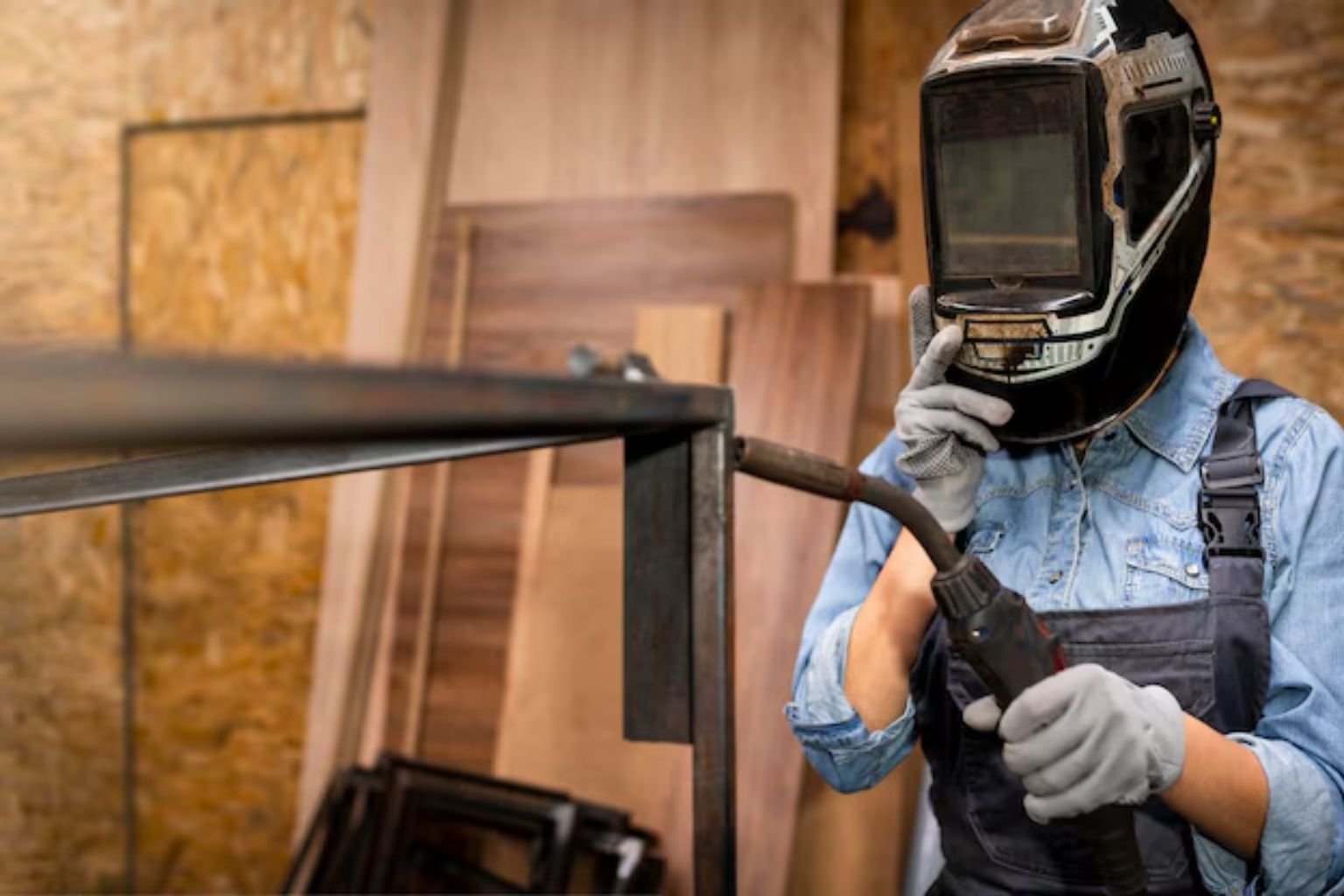
Learn how to use a welding mirror correctly, safely, and efficiently with expert techniques, visibility tips, and real-world safety considerations.
The weld looks clean from the outside. Turn the part over, and the reality is different: tight corners, blind joints, and a bead you can hear but can’t see. That moment usually decides whether a welding mirror stays in the toolbox or becomes part of the daily routine.
A welding mirror is not a shortcut. It is a visibility tool. Used well, it reveals what your eyes and helmet cannot. Used poorly, it introduces distortion, fatigue, and risk. Most issues come down to setup, angle, and discipline rather than the mirror itself.
This guide breaks down how experienced welders actually use a welding mirror on the job. Practical technique, safety awareness, and a few realities that often get skipped.
Many welds fail visually before they fail structurally. Limited sight lines lead to uneven beads, missed fusion, or excessive heat input. A welding mirror does not improve skill, but it exposes mistakes early.
Pipe roots, overhead joints, internal corners, these are the spaces where mirrors earn their place.
Repositioning the workpiece is not always realistic. Neither is contorting your body into unsafe positions. In those moments, the welding mirror becomes the safer choice as the smarter one.
Small mirrors provide precision but reduce context. Larger mirrors give more reference but increase glare and distortion. There is no universal size. It depends on joint type and access.
Round mirrors tend to reduce edge distortion. Rectangular mirrors offer better alignment cues. Both have trade-offs.
Rigid handles offer better stability. Flexible necks allow angle adjustments but demand greater control. Too much movement quickly causes visual fatigue.
A welding mirror that vibrates or drifts becomes ineffective in a short time.
Spatter on the mirror surface ruins clarity. Dust in the joint exaggerates glare. Even a thin film of residue changes how light reflects.
Clean the mirror before every setup. It seems obvious, but it is often overlooked.
Welding mirrors rely heavily on reflected light. Poor lighting increases contrast issues. Too much light creates a washout.
Adjust the work light before striking the arc. Small changes matter here.
Most beginners place the welding mirror too close. That narrows the perspective and magnifies the distortion. Back it off slightly, then fine-tune the angle.
The mirror should show the puddle and the joint edges. Not just the arc flare.
Rest the mirror handle against a solid surface when possible. Floating mirrors introduce shake. Shake leads to eye strain.
If stabilization is not possible, slow down the travel speed. Visual lag is real.
Reflected movement reverses direction. This is where many welders lose confidence. Practice improves control, but awareness matters even more.
Move deliberately. Pause between adjustments. Overcorrection is common in the early stages.
Switching between direct sight and mirror sight increases fatigue. Commit to the mirror once the arc starts. Do not bounce back and forth unless necessary.
Your welding helmet settings matter here. Poor shade balance makes mirrored viewing harder.
Mirrors reflect more than just light; they can also reflect some heat. Keep the mirror away from direct arc exposure. Prolonged heat may cause warping, discoloration, or reduced clarity, but shattering is extremely rare.
This is where proper welding safety gear becomes non-negotiable.
Using a welding mirror does not reduce exposure risks. Welding helmets must remain properly positioned. Welding hoods should fully shield reflected arc light. Welding sleeves and welding aprons protect against spatter redirected by the mirror surface.
Neglecting protection because visibility feels indirect is a common mistake.
A poorly positioned welding mirror wastes more time than it saves. Taking thirty extra seconds to align it properly pays off in bead quality.
All mirrors distort slightly. Skilled welders learn how their specific welding mirror behaves. Ignoring distortion leads to inconsistent penetration.
Mirrors are aids, not replacements for sound technique. If a joint can be repositioned safely, that option should still be considered.
Instead of staring directly at the arc reflection, some welders track the puddle edge in peripheral view. It reduces glare and eye strain.
This takes practice. It is not intuitive.
In extreme access situations, two mirrors may be used to create a usable sight line. This increases distortion but can be effective with patience.
It is not common. It is sometimes necessary.
A welding mirror changes posture. Often for the better. Reduced strain lowers fatigue over long shifts.
However, new hazards appear. Reflected arc light, unexpected spatter angles, and altered hand positioning all demand attention.
Welding safety gear should be reviewed when mirror work becomes frequent. Welding helmets with adjustable shade response help. Welding hoods with proper coverage matter more than usual. Welding sleeves and welding aprons protect areas that may not normally face the arc.
Not all mirrors withstand harsh shop conditions. Handles can loosen, glass may cloud, and adjustment joints can fail.
Durability matters because consistency matters. A mirror that shifts mid-weld introduces risk and frustration.
At this stage, the technique is clear: proper setup, correct angles, and disciplined movements. That still leaves the question of the tools themselves.
Some welders look for equipment designed by people who actually weld daily. Tentacle Tools is a brand built by an experienced welder and engineer, with products tested in real conditions before release.
Upgrade your gear with tools built by welders, for welders—shop Tentacle Tools today and experience the difference on every pass
What is a welding mirror mainly used for?
A welding mirror allows visibility in joints and positions where a direct line of sight is blocked or unsafe.
Does using a welding mirror affect weld quality?
It can improve consistency when used correctly, but a poor setup may introduce distortion and errors.
Is special safety gear required when using a mirror?
Standard welding safety gear still applies, including welding helmets, welding hoods, welding sleeves, and welding aprons.
Can beginners use a welding mirror effectively?
Yes, but it requires practice and patience due to reversed movement and visual distortion.
How often should a welding mirror be replaced?
Replace it when clarity degrades, adjustment joints loosen, or heat damage becomes visible.
Effective use of a welding mirror is less about vision and more about control: control of the angle, control of movement, and control of the environment.
The mirror reveals the truth of the weld, whether you are ready for it or not.
And once you see clearly, expectations tend to change.
Explore insights, tips, and trends in tech and productivity!


