


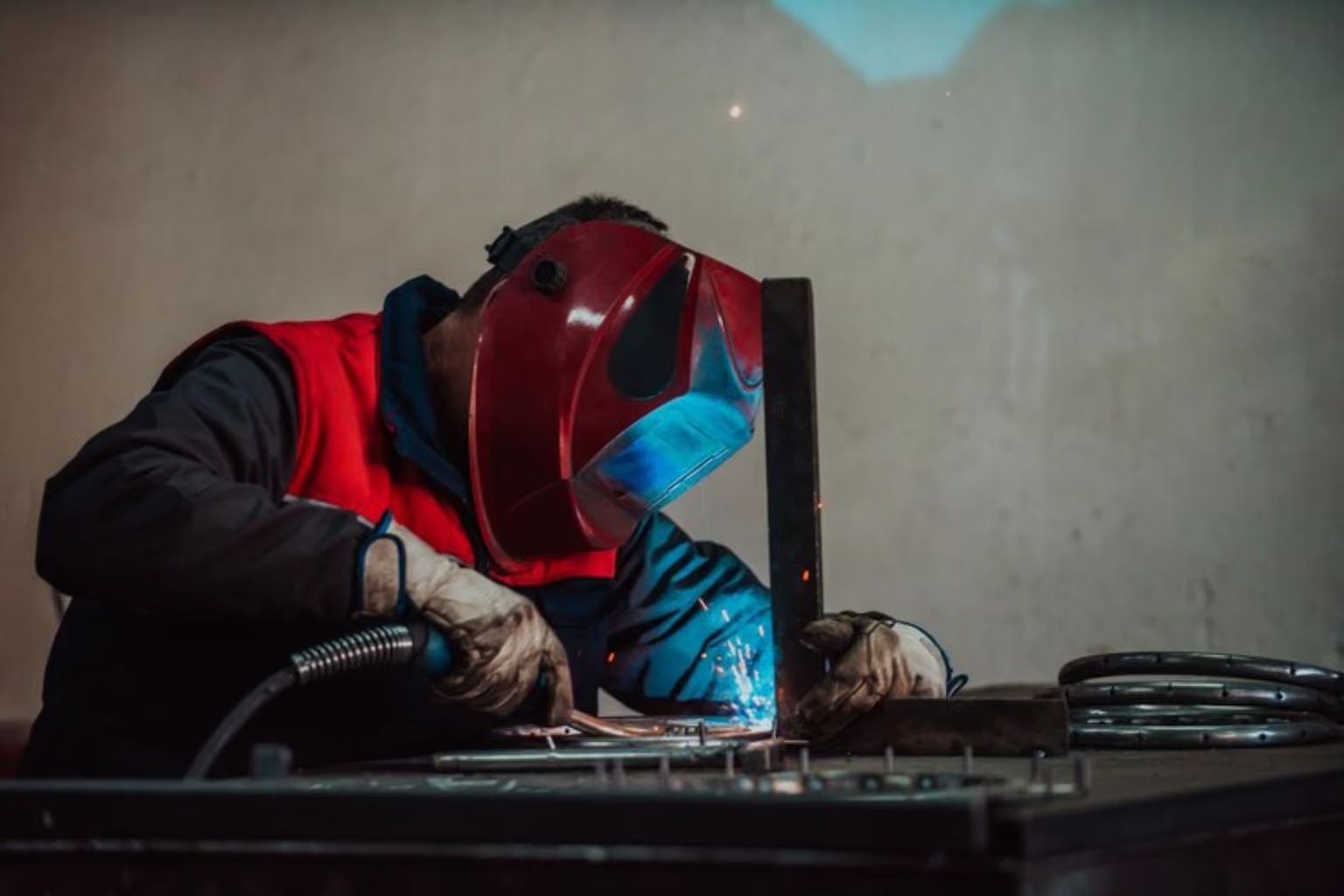
Practical ergonomic welding tips covering tools, layout, and welding tables to reduce fatigue and strain during long shifts.
Anyone who has spent hours under a hood knows the quiet truth about welding fatigue. It does not arrive all at once. It creeps in through stiff shoulders, a wrist that no longer settles easily, or legs that feel heavier near the end of a shift. Productivity drops, weld quality follows, and the body keeps score long after the job wraps up.
Ergonomics in welding is not about comfort for comfort’s sake. It is about sustaining precision over time. It is about making sure the workspace works with the welder. Welding tables sit at the center of that conversation, whether in a fabrication shop or a field setup, because posture begins where the workpiece sits.
Welding places steady demands on the body. Repetitive motions, sustained static positions, heat exposure, and limited visibility all contribute. Over time, these factors tend to stack.
Industry studies on skilled trades suggest welders face a higher likelihood of musculoskeletal strain than many other shop roles. Lower back discomfort, neck tension, and shoulder fatigue appear most often, especially during long shifts or high-volume production runs. It is believed that poor workstation layout plays a larger role than tool choice alone.
Fatigue also affects consistency. When arms tire or balance shifts, bead control suffers. Small deviations add up. Ergonomic welding setups do not eliminate effort, but they may reduce unnecessary strain that distracts from the work itself.
Welding ergonomics refers to designing the workspace, tools, and workflow to support neutral body positions during welding tasks. Neutral does not mean upright at all times. It means joints are not forced into extreme angles for extended periods.
The benefits tend to show up quietly. Less end-of-day soreness. Fewer pauses to reset grip. More stable positioning during fine work. Over a full week, that difference becomes noticeable.
Extended welding sessions expose small inefficiencies. A table slightly too low pulls the back forward. Poor clamp placement forces awkward wrist angles. Over hours, those compromises drain focus. Ergonomics aims to remove those friction points before they compound.
How often a welder reaches matters. Frequently used items should live within a natural arm sweep. Welding pliers, clamps, and magnets should be visible and reachable without twisting. Magnetic holders and vertical tool walls often help keep surfaces clear while maintaining access.
When tools scatter across a bench, movement increases. Not dramatic movement, just enough to interrupt the rhythm. That interruption carries a cost over time.
Welding tables do more than support material. They establish posture. Table height that matches the task reduces shoulder lift and forward lean. Adjustable welding tables offer flexibility for varied projects, especially when switching between bench work and larger assemblies.
Fixed tables still work well when paired with adjustable stools or footrests. The key is allowing the welder to bring the work to a comfortable height rather than adapting their body repeatedly.
Welding tables also influence fixture stability. A rigid surface reduces the need to brace awkwardly during tack or finish passes.
Standing all day is not always the answer. Alternating between standing and seated positions can help manage fatigue. Adjustable stools allow partial weight relief without compromising control. Footrests reduce lower back strain during longer stationary tasks.
Poor lighting forces unnatural head angles. Task lighting positioned to avoid glare helps maintain a neutral neck position. Clear visibility reduces micro adjustments that add up to fatigue. Welding curtains play a role here too, containing arc flash while allowing better control over ambient light levels.
Inconsistent power interrupts the flow. Restarting equipment, adjusting lighting, or compensating for voltage drops breaks focus. Reliable power sources support steady lighting and tool performance, which indirectly reduces mental and physical fatigue during long sessions.
Tool weight and balance matter more than many expect. Welding pliers used repeatedly throughout the day should feel neutral in the hand, not front-heavy. Subtle differences affect wrist tension.
Welding clamps that hold securely without excessive tightening reduce grip strain. Over-clamping often stems from poor fixture alignment rather than necessity. Well-designed clamps reduce that impulse.
Welding magnets for sale vary widely in holding strength and profile. Slim magnets that sit flush reduce the need for awkward hand positioning during setup.
Auto-darkening helmets reduce neck strain by eliminating repeated nodding. Anti-vibration gloves can help during grinding or prep work, though fit remains critical. Loose gloves introduce their own problems.
Adjustable jigs and fixtures support consistent angles. When the work holds position, the welder does not have to. That distinction matters during repetitive runs.
Short breaks reset posture. Even thirty seconds to stretch hands or shoulders can interrupt fatigue buildup. Task rotation also helps. Switching between fit-up, welding, and inspection spreads physical load across muscle groups.
Perfect posture is unrealistic. Awareness is more useful. If a position feels strained early, it will feel worse later. Adjust the table, the clamps, or the material angle. Small corrections early prevent compensation habits.
Whenever possible, rotate the work rather than the body. Positioners, jigs, and fixtures exist for a reason. Welding tables with grid patterns support flexible fixturing that adapts to varied parts without constant repositioning.
Begin by adjusting the table height and assessing reach zones. Ensure lighting is angled properly and move frequently used tools within easy reach. Replace any worn grips and consider adding a footrest. Most of these improvements can be made with minimal investment.
Adjustable welding tables, improved seating, and better fixture systems take planning but deliver longer-term benefits. Welding curtains that manage light and heat improves comfort for everyone in the space.
If evaluating changes feels overwhelming, focusing on one workstation at a time keeps the process grounded.
Tentacle Tools develops gears tested by welders who use them daily. That user-driven approach shows up in details like clamp ergonomics and magnet profiles. It is not about adding more tools, but refining the ones already in use.
Exploring tools designed around real workflows can be a practical step when refining an ergonomic setup.
Shop the Collection & Upgrade Your Workflow Today!
Ergonomic welding is rarely a single purchase or adjustment. It is an ongoing evaluation. Observe where fatigue appears first. Adjust the environment. Reassess after a week.
If you are reworking a shop layout or upgrading welding tables, take the time to map tool placement and posture before installing new equipment. That planning phase often determines success.
For those looking to refine their setup further, reviewing workstation layouts or consulting experienced tool suppliers can uncover issues hiding in plain sight.
How often should welding tables be adjusted?
Whenever tasks change significantly. Even small height adjustments can improve posture.
Do welding clamps affect fatigue?
Yes. Poor clamp placement or excessive tightening increases wrist and forearm strain.
Are welding magnets safe for precision work?
They can be, if selected carefully and positioned to avoid arc interference.
Can welding curtains reduce fatigue?
Indirectly. Better light control reduces eye and neck strain over long sessions.
Is ergonomics only for large shops?
No. Small shops often benefit the most because changes are easier to implement.
Reducing fatigue in welding is not about perfection. It is about making work sustainable enough that focus stays on the weld, not the discomfort creeping in around it.
Explore insights, tips, and trends in tech and productivity!